Monday, January 17, 2011
Nintendo Adventure Books 4: Koopa Capers
Here again we visit the work of Bill McCay, who wrote one of the worst Nintendo Adventure Books by trying a little too hard to make his book like the Mario games (at least, that’s what it felt like). Here he tries the same approach again, with, well, better results.
Luigi’s interrupted while working the bugs out of a new pasta-maker when a magic carpet shows up on his doorstep that whisks him to Bowser Koopa’s castle. Rather than wanting to chew him to little pieces, though, Bowser asks for help in finding his daughter, Wendy O. Koopa, who’s gone missing. While still having to fight the entire Koopa army because it would be bad for Bowser’s image if anyone knew they were working together.
So again, McCay tries to write a book that’s basically a Mario game with the occasional amusing one-liner thrown in. Some of the puzzles involve things like deciding if Luigi can make a jump or if he should wait, and exploring Bowser’s castle in search of Wendy O. does feel a lot like doing so in one of the games.
Koopa Capers is saved from the monotony of Monster Mix-Up, thankfully, by letting you feel like you’re actually doing something besides just running around until you get to the end of the book. You have a goal beyond “stop the bad guys,” furthermore an open-ended one as you have no idea where Wendy O. could be or why she’s gone missing, which makes the exploring feel more meaningful.
For that matter, McCay expanded the role of inventory in this book, meaning you also need to go exploring to find items to survive the castle and get to the bottom of the mystery. In an open-ended adventure, finding a lot of stuff usually means you’re getting farther along in the quest, which helps you feel like you’re doing well. This is a lesson McCay didn’t work into Monster Mix-Up, which had two whole items to find, one of which killed Mario if he tried to use it.
Also, the book doesn’t ask you to keep up with a constant flow of piffling amounts of coins, helping not to break the flow so much.
None of this is to say Koopa Capers is any great writing achievement, though. Just that if McCay tried to scrupulously recreate the games while remembering to write an adventure book, he was capable of producing something readable. Not great, but readable.
Nintendo Adventure Books 3: Monster Mix-Up
After Clyde Bosco’s one-two punch of duplicated monsters and mushroom Olympics we’re treated to the stylings of Bill McCay. It won’t be long until you’re wishing Bosco had come back for another book.
Mario and his buddies are attending a circus when the princess suddenly disappears and he and Toad are faced with an onslaught of Koopa monsters that have been mixed together. That’s it for the plot, really.
The rest of the book is a series of short paths as Mario tries to make his way across the generic environs of the Mushroom Kingdom to Bowser’s castle to rescue his friends, and the narrative makes it perfectly clear why this approach can be acceptable for a videogame but not a book. In the games, you’re focusing on the screen and pushing buttons to avoid the perils. In Monster Mix-Up you’re reading about Mario running around and occasionally decide if he should go up or down, left or right, and by the third time the fun has long since worn off.
It really does feel like McCay was trying to capture the feeling of playing the games (especially based on his next book), but if that’s what you want wouldn’t just fire up the Nintendo rather than crack open a book?
Not to mention that despite the premise being an attack of mixed-up monsters, it’s easy to read through the book while running into hardly any of them. Especially if you manage to find the one crucial item you need early on and don’t need to be sent back to near the beginning of the book to get it
Scoring might be the most irritating thing about the book, as unlike the previous two where coins tended to come in clumps, McCay once again seemed to be trying to recreate the experience of SMB3. In numerous paths Mario will get his hands on two or three coins, forcing you to regularly flip to the last page to record an amount of coins that doesn’t seem worth the trouble. It would interrupt the flow of the adventure too, if the adventure had any to begin with.
The book is just one grating thing after another. There’s nothing wrong with wanting to be faithful to the source material, but with a different medium comes a different set of expectations.
Nintendo Adventure Books 2: Leaping Lizards
Double Trouble got decent but low marks for being an acceptable book but a fairly dull adventure. Bosco’s second attempt starts out looking like it might go the same way, but if you make it far enough, or look at the cover, you might know to expect something a little off the norm.
Luigi, the smarter, overlooked younger brother, sleeps in and misses an awesome picnic, but is the first on the scene when one of the Koopa kids uses his magic wand to turn the Mushroom King into a rabbit. Even after Luigi chases him down and gets the wand, though, it turns out the magic only works one way and so when Luigi tries to turn the king back to normal he just turns his majesty from a rabbit into an eight-foot rabbit. The only thing that can change him back is a magic whistle, like the kind that’s the prize for winning the International Mushroom Games.
As noted the book’s divided into two major sections, the first of which is pretty standard Mario fare, while the second is the games, and they’re what make the book stand out. Parts are of them silly and random, but Bosco’s to be commended for his research. Peach’s a champion surfer, which you might remember from the cartoon, and Toad wins the weightlifting competition for the Mushroom Kingdom, alluding to the strength that was his trademark in SMB2. Which wasn’t really a bad Mario game but when put against the others is clearly the worst of the bunch (kidding).
And usually I try to avoid spoilers, but it was pretty satisfying that Peach crushes the opposition in the first event. Seeing as how videogames bad videogames were about the heroine always needing to be saved then, especially the Mario series, that was a breath of fresh air.
With the exception of the magic wand, the items in the book still serve to help (or in one case, hurt) but aren’t necessary to achieve a successful ending. When it comes to having a high enough score to get the maximum ranking, however, getting the optimum ending is the only option. Something that may rub some readers the wrong way is that you can’t get the gold (or rather tin) medal in every single event no matter how well you do. I personally liked that the Koopas were able to hold their own in the competition.
Compared to Double Trouble, the writing’s about the same, but it’s saved from a lesser rating by a much more inventive and just plain fun premise. If you’re willing to put up with elements from the Saturday morning cartoon.
Nintendo Adventure Books 1: Double Trouble
Unless you’ve been living under a rock for the better part of the last two and a half decades, you know about Mario, savior of the Mushroom Kingdom. Scourge of the Koopa Clan. Star of some of the most unwatchable TV and movie adaptations of an enjoyable videogame ever made. Can everyone’s favorite clog-cleaner still be fun when there’s a different take on making his adventures interactive? Let’s find out.
The book opens on Mario waking up in the middle of the night thanks to the Mushroom Kingdom alarm going off. When he tries to call Princess Toadstool to find out what’s up he finds out Luigi used up all their minutes and he can’t get through. Speaking of Luigi, the younger Mario Brother is nowhere to be found. Eventually getting sick of the buzzers Mario goes to check things out by himself and finds twice as many Koopa monsters as usual running around.
Since the Mario games are all about escaping traps and obstacles, when confronted with one the book usually doesn’t just give you a choice. Most of the time there’s a puzzle telling you the smart thing to do, if you can solve it. Given that the books were written before the idea that people over the age of twelve played videogames had occurred to anyone besides gamers, that’s usually not hard.
Taking a cue from Super Mario Bros. 3, there’s an inventory system in place and most of the items to be found are from that game. Mind it’s possible to win without needing any of them, but making things a little easier is what power-ups are there for in the games, right? When in doubt, break something, indeed.
There’s also a scoring system in play, where you get points for collecting coins, and the more you have by the time you get a Game Over, the higher your rank. You only need to find 30 coins to get the highest rank, though, and at least in this book it’s not hard for a thorough reader to get the highest rank even if they lose. This is especially true because the book’s divided into two sections where in the first it’s pretty hard to get killed. Even if you make the wrong choice you’ll usually be given another chance. Once Mario’s inside the Koopa fortress, though, all bets are off. Which really is as it should be.
Mechanically there isn’t much wrong with the book, and Clyde Bosco's writing is actually pretty good for something aimed at a young audience. The only thing really hurting it is the premise is kind of pointless when the Koopa armies always seemed basically unlimited in the games anyway. Plus the encounters are extremely standard fare for a Mario game; who hasn’t blasted through a zillion interchangeable dark, forbidding fortresses?
Then again, it’s hard to name an interactive book series that didn’t begin with a generic entry.
Noctropolis
It’s not easy being Peter Grey. His bookstore’s on the verge of bankruptcy and his wife’s cheating on him with his best friend. His only escape is the comic book adventures of Darksheer, the Batman-esque protector of the eternally darkened city Noctropolis. Even that’s about to be taken away as the new issue ends with Darksheer dealing with the last of Noctropolis’s villains and retiring from heroics.
His doorbell wakes Peter from nightmares of being seduced by a fanged woman to learn he’s the winner of the “I Want To Be Darksheer!” contest. He gets a package containing two coins and a new issue where a villain called Flux breaks Darksheer’s rogues gallery out of jail and starts terrorizing the city. And as soon as Peter touches one of the coins he finds himself in Noctropolis, a city crying out for a hero.
Frankly it’s a surprise that anyone decided to make a serious superhero game not based on a licensed property, let alone a point-and-click title rather than an action game. This unlikelihood is evident at times during the game, as the designers didn’t seem entirely sure of what they were doing. The dialogue during the comic book scenes is ridiculous most of the time. And not in the "it's a comic book" sense, instead as if the writers had never read an edgy 90’s comic. Which is the very thing they were trying to create. Have you ever heard being murdered referred to as “a ride on the body bag express”? That sounds dumb even to me, and I've read my fair share of comics.
The dialogue throughout the rest of the game is similar, with people sounding like they’re reading pre-scripted responses to general questions. Of course they are, but they shouldn’t sound like it, and in the good adventure games they don’t. Then again in good adventure games they usually don’t reveal clues or the plot by making you click through about twenty dialogue options and listen to every single response with every person you talk to, either. Investigation has its place, but what kind of action-packed superhero game is that?
![]() |
| Yep, no sun. |
![]() |
| No sun at all. |
Speaking of destroying the atmosphere, after Peter ends up in Darksheer’s hideout and assumes the mantle himself, nobody notices. He’s going around town dressed up like the local superhero, the one everyone’s desperately hoping will come back and save them from the forces of evil, with the local superhero’s knife-toting partner, Stiletto, at his side. Only Darksheer’s enemies react to them as if they’re anything but two regular people who want to see the head of the company or get a pound of ground beef or whatever. It’s hilarious, and throws the idea of this game as a serious, mature adventure to the winds.
Interfacing with your surroundings in Noctropolis can be a chore, even for veteran adventure gamers. For one thing, veteran adventure gamers are probably used to there being a general move command that makes your character walk wherever you click on the screen. Noctropolis has a “GoTo” command, but it only works on specific parts of his surroundings. So he can walk to a carpet or to the sidewalk, but only if you click on something that the designers though merited a description box. This is jarring when you reach a screen where Peter has to sneak around a bunch of spotlights and he suddenly does walk wherever you click. It’s easily the most frustrating part of the game.
For what it’s worth this game does take some of the guesswork out of using items. Rather than being forced to try every item you find on everything in the game, the use command is very general. If you’re in the right place to use an item or have the thing you’re meant to combine it with in your inventory, Peter automatically figures out what the designers intended. And usually the proper use for items in this game isn’t too much of a stretch, like jewelry = bribe material, diamond = makeshift glass cutter. No, the problem is finding the tiny sprite meant to be a screwdriver or oil can in the vast environs you’ll explore, or realizing you’re meant to pull out one (and it has to be just the right one) of the fence spars.
![]() |
| The only superhero endorsed by Red Green. |
Where the game really drops the ball is its portrayal of Stiletto, Darksheer’s former partner and would-be girlfriend. The game wants you to believe she’s this deadly femme fatale, and she does help out during Peter’s first battle with a villain. After that, pretty much her only utility is to pump stupid, horny men for information and get captured so a guy who wasn’t even a superhero the day before can save her.
![]() |
| Actually, I'm kind of glad I couldn't get the sound to work. |
There’s a lot of fun that could be had in an adventure title about an original superhero character. Unfortunately Noctropolis is a pretty good example why you can count the games like that on one hand. With all these things weighing the game down, it’s really no wonder there was no story of Peter rising up against a new evil threatening the city of night.
Monday, January 10, 2011
Twilight Chapter 18: The Hunt
1. The three outsider vampires make their way onto the baseball field. “They closed ranks before they continued cautiously toward Edward’s family, exhibiting the natural respect of a troop of predators as it encounters a larger, unfamiliar group of its own kind.”
“Edward’s family.” It’s always about him, huh? It’s like she only agreed to meet his family to make the business of deepening their relationship go easier.
When did she get to be the expert on predatory animals, anyway? By that same token I find it sort of hard to believe Bella knows what she’s talking about when she says the outsider vampire girl’s “posture was distinctly feline.”
One of them was “easily the most beautiful.” This is to contrast them not being as beautiful as the Cullens. Being a vampire makes you hot, you see, but it makes you a lot more hot if you're hot already. And if Bella hadn’t been taking literally every possible opportunity to say so before this, the description would be a lot less pointless and annoying. By this point in the narrative it’s like saying the sky’s blue. If she hadn’t gone on and on and ON about Edward’s perfection, a much stronger contrast would’ve been drawn between the Cullens and the other invasive vampires, who Bella describes with words like “regular” and “nondescript.” And unlike the Cullens’ designer clothes the ones the new vampires wear are all frayed. You hardly even notice it anymore (but you still do and its only impact is still annoyance).
Plus, their eyes aren’t gold or black, but “a deep burgundy color that was disturbing and sinister.” Because they’re bad guys, you see, despite what you might be tempted to think from how they don’t immediately attack the Cullens (if you haven’t read this, yes, it’s that kind of book).
2. The outsider vampires, by the way, are James, Victoria, and the “most beautiful” one is Laurent. Carlisle, Esme, Rosalie, Jasper…so many minor characters with no development, and weird, archaic names and we’re supposed to keep them all straight?
3. As if the baseball thing wasn’t dumb and random as it was, Laurent asks if he and his friends can join the game. Carlisle politely turns them down, and explains that they’re the only vampires living in the area. Given how cloudy it is, and how only one person in town’s been able to see through their pitiful act, you’d think more vampires would be living there.
Carlisle even explains he and his family are permanent residents of the area, and Laurent asks how that’s possible, “honest curiosity” in his voice. Okay, for real this time, how does Bella know what “honest” curiosity sounds like? She’s portrayed as the ultimate wallflower. What the hell does she know about reading people when they’re not in a book?
4. Fortunately, just when it looks as if diplomacy might win the day, Meyer whips up a breeze that carries Bella’s oh-so-intoxicating scent to the other vampires, alerting them to the fact that she’s human. Technically.
This results in James flaring his nostrils and Edward flashing his teeth and snarling at him. This takes me back to one of my earliest complaints about what the hell Bella knows about reading anybody, and all it said was one of the mortal guys beneath Bella’s notice had unfriendly body language toward Edward. See Meyer? That’s showing, not just telling. Or can she only write “hostile” body language?
James, our villain, jokingly asks if Edward brought a snack, but it would be beneath me to say that’s closer to how Bella’s treated by her so-called boyfriend.
5. For what it’s worth, despite the promises from Laurent that he and his friends won’t hunt in the Cullens’ territory, Bella’s “terrified into immobility” by these new vampires. While it’s sort of nice to finally see she’s capable of parsing the fact that a predatory species is a threat to her life, it makes Edward’s claims that veggie vampires are still dangerous even more meaningless. It’s like she really does know Edward’s the hero of the book and all the dangers he mentions from being around him are only there for the sake of adding to the mystique.
6. The vampire kids hustle Bella back to the Jeep in an “impossibly short time” (after everything she’s still saying that?), and they drive away as fast as they can while ignoring Bella when she says she has to tell Charlie what’s going on or he’ll get the cops and the FBI down on the Cullens. To which Edward counters that’s nothing they have to worry about. Gee, aren’t the Cullens awesome that even the feds aren’t a problem for them?
Bella refuses to let the Cullens ruin what they have going in Forks over her, because she’s so humble and there’s only a problem if it’s a problem for them.
Alice tries to get Edward to calm down, but he’s having none of it. He declares James to be “a tracker,” which is so serious he says it twice. As if we should know what that means. In a book that does just about everything it can to venture from the typical portrayal of vampires, that’s bad form indeed.
Plus, the first mention is “He’s a tracker, Alice, did you see that?” Like Edward’s attacking the accuracy of her premonitions. What happened to you’d have to be crazy to bet against her?
We do get some half-baked, awkward exposition about what a tracker is: “Once he commits to a hunt, he’s unshakable. We’d have to kill him.” So…what do they think they’ll do, since he’s already made up his mind to hunt Bella?
Before letting this part go, it says a lot about Edward that he admitted it was his stupid fault that Bella was exposed to the evil vampires (he kept mentioning how dangerous it was for them to associate, who could’ve imagined it actually would be), and now he refuses to listen to anyone’s opinion on what should be done but his own.
7. Seemingly catching on to how Bella’s supposed to be special but hasn’t done anything except ignore her survival instincts up to now, Meyer has her come up with a plan for how the Cullens can protect her, deal with James, and keep her dad safe all at the same time because James would obviously look at her house first.
She’ll tell Charlie she broke up with Edward and wants to go home to Phoenix, which is where some of the vampire kids will actually take her. Supposedly James will know they know he’s watching and so he won’t think that’s where they’re actually going. Meanwhile the rest of the Cullens will stick around to deal with James, so Charlie won’t think they had anything to do with Bella’s sudden departure.
That this is supposed to be a wonderfully devious plan (if the Cullens say so, it must be), let alone one that can throw a superhuman predator who literally lives for the hunt, is pretty funny. What’s even funnier is how Meyer goes back on it later, and makes the Cullens look like morons for praising it.
8. As Bella goes in to kick off the plan, Edward asks Alice if she can handle this. She replies with animalistic snarl. Edward‘s response? “But keep your opinions to yourself.” Ha ha ha. I’d say Meyer should stick to the romance but that’s even worse than her jokes.
Saturday, January 1, 2011
Dino Squad - Scents and Scents Ability
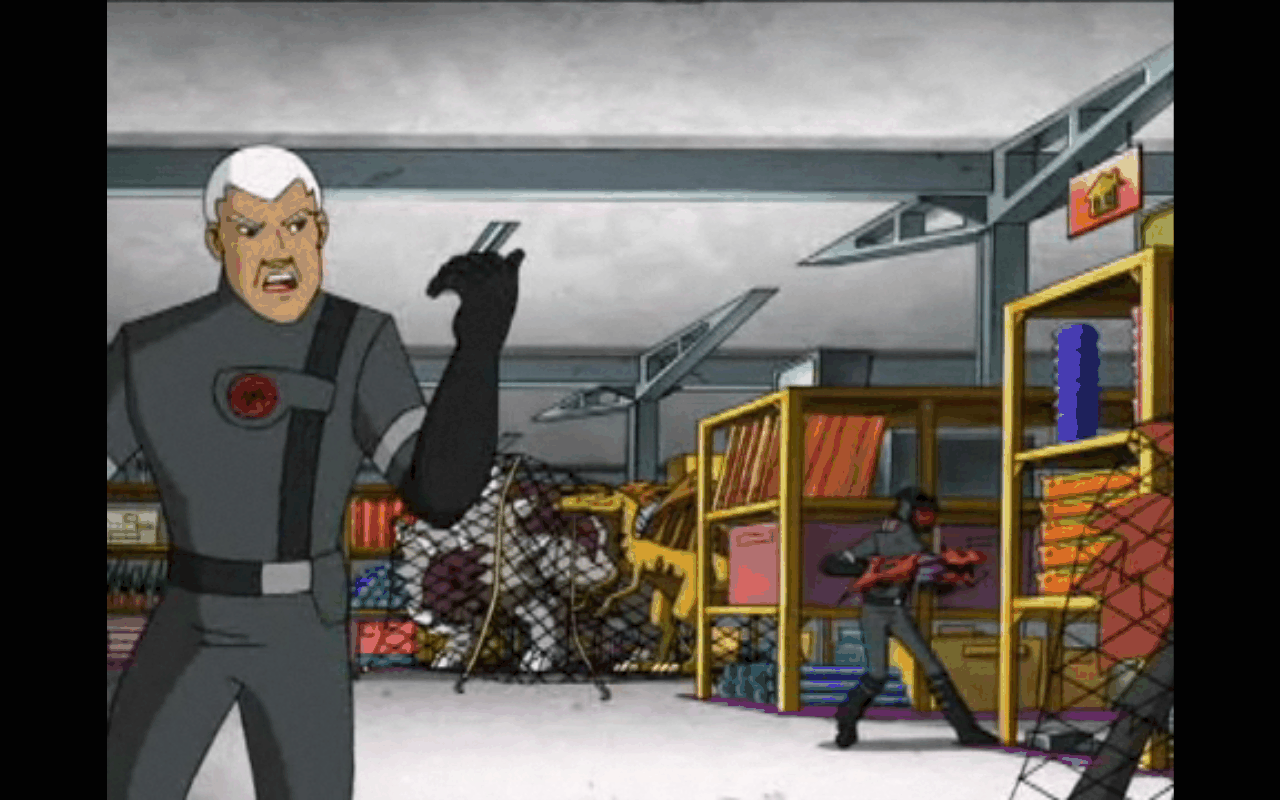
I know I said the Hawaii episode was the one that convinced me to pick on the show, but there’s one that, while maybe not as preachy, is a classic combination of stupid writing and sheer lameness. It’s the one where they realized Caruso didn’t really have a point on the team, and set out to show even an image-obsessed dork had something to bring to the table.
Things open on a shot of ants crawling through tunnels as a menacing voice tells them to “transform your world into one magnificent hive,” even though it’s obviously Buzz talking and not Veloci. Surprising no one, the cavernous complex turns out to be nothing but his ant farm, which is also his science project. High schools still make you do science projects?
Buzz “gives you the 411” on all the awesome things ant antennas can do, like pick up messages from other ants via smells called pheromones. Pardon me for doubting his credentials when this same guy needed Caruso to tell him ants don’t live in “hives.”
Caruso’s bored stupid by this explanation (hasn’t he ever seen a TV show? Insignificant stuff like this always tells you how to save the world over the next twenty minutes) and Buzz challenges him to present his own science project. He does: his own homebrew line of moisturizers.
The smell makes Buzz’s ants go nuts and crawl out of the ant farm. Buzz is none too pleased: “Way to ruin my project, Caruso.” Way to forget to put a lid on your ant farm, Buzz. Yes, I blame him for the ants getting in Rodger’s molecular deionizer more than I do Caruso. On an unrelated note, my spell-checker already thought “deionizer” was a real word, which is awesome.
Indignant at this displacement of blame, and the fact that he can’t invent comic book devices like Rodger or stupid-looking motorcycles like Fiona, Caruso leaves because he thinks the only reason he’s there is he has the same dino-powers as everyone else.
Moynihan chides the other kids for being so rough on Caruso, but even she keeps coming back to what a selfish prick he usually is. She does stick up for him a little because he doesn’t feel like he brings anything to the group. Rodger gets off the immortal line “hair gel and moisturizers are never gonna save the world,” telling us he’s never seen a TV show in his life either. Moynihan has, or else she moonlights as the school’s guidance counselor: “Everybody has important skills, even if their value isn’t immediately obvious.”
Max goes to bring Caruso back and starts checking out the various stores at a mall because that’s the only place in the world Caruso could be. The jock finds him at a day spa, but to be able to go in and apologize he finds out he’ll have to get a session himself. To Max’s amazement the spa actually uses the stuff Caruso’s handing in for his science project. The full treatment at this place is even called “the complete Caruso.” Suddenly his baking soda volcano’s starting to look kind of lame in comparison.
Instead of killing time waiting to talk to his selfish dork of a “friend” for free, Max empties his wallet for an all-day pass. All to crash and burn in the attempt to come up with an answer to one question: what does Caruso add to the team?
It might bear mentioning that during this part a couple girls come up and talk to Caruso with fondness and familiarity, but all they talk about is how much they like the lotions and salt scrubs he makes. And all he talks about is new mixtures he’s planning to try out. Draw your own conclusions.
The other kids pick up a prehistoric DNA (sigh) alert at what looks like a Sam’s Club. The mutants du jour are giant ants, or “mut-ants,” or “giant ant dudes.” Was this actually locked in DiC’s vault back in 1987? But after the kids finish their time-wasting transformation sequence they find themselves netted and gassed by Veloci’s goon squad along with the ants. The head goon, who reminds me vaguely of the only memorable character from Avatar, tells his boys to take them to…the lab!
Max and Caruso get back to the lighthouse and Caruso announces his retirement after one tame disagreement, but Moynihan talks him into going on this one last job. They get to the Sam’s Club just as Veloci’s pulling away in in his totally inconspicuous raptor-faced truck. He even drives it down a residential street in broad daylight!
Caruso stops because “I’ve spent a lot of time out here, researching the mud baths” and somehow this means he knows a shortcut to Veloci’s headquarters. I get the sense they’re trying to show how Caruso’s weird interests can be useful after all, but that’s the only kind of sense I’m getting from this. What mud baths? Whatever the writer was trying to say, they do indeed get there ahead of Veloci and block the loading doors. They split up, Max to release the ants to distract the guards, then Caruso to let the other dino-kids out. When Max opens up the truck the ants prove a little bigger and scarier than he was expecting, so he goes dino but is spotted and captured in the process.
Caruso despairs about getting in when he remembers what his homemade hand lotion does to ants, and gets the big mutant ones to chase away the guards by throwing some of the stuff at them. Good thing he actually has seen TV and knew they’d run away without getting ripped to shreds by the oversized insects.
He gets cornered by a pair of the bugs himself, but is able to scare them off by going dino and stamping his feet once. Or maybe it was telling them to “get along little doggies.” Why does the music tell them to go dino when it shows them changing back?
Caruso realizes that the security cam probably recorded him changing. As if a teenager sneaking around the place in the dead of night wouldn’t have been noticed anyway. He spots some guys hauling a cart with boxes, and somehow knowing they’re going to the place where his buddies are being kept, jumps into a crate. He thanks his years of yoga for his ability to do this, but it honestly looks like something any moderately flexible person could manage.
He steals a uniform and when a real guard comes over to ask what he’s doing, Caruso splatters more hand cream on the guy’s face and opens the cages somehow containing more ants. Even though Max released them from the truck and the guards thought catching a t-rex was the real priority. Which means this is the second time inside of five minutes Caruso’s had ants the size of cars attack somebody. Does their policy not to take life only apply to mutated animals?
In fact, he gives more of the cream to another pair of guards he meets passing it off as bug repellant, and tells them to give it to all the other guards on Veloci’s own orders. He even rubs some on himself and leads the ants into the security office to scare everybody else out of it. You have an interesting way of making someone seem like a valuable team member on a kids’ show, Robert N. Skir! And why do the ants suddenly ignore Caruso after following him up there?
He pours more lotion on the security console and the ants rip it up for him, but he’s been throwing his empties any old where. They all have his face and probably his name on the label, which kind of defeats the purpose of making sure Veloci doesn’t see the security footage. Lucky for him Veloci couldn’t conquer a comic convention.
By the time Veloci finally gets down to the work floor, Caruso’s saved the others and the kids have turned all the ants back to normal with their stupid guns. And somehow they got out past the guards even though the ants were the only thing keeping them busy.
Action’s over, time for one of the show’s trademark lame, abrupt and painfully unfunny endings. Moynihan picks the kids up and drives them back into town. And suddenly it’s day even though it was dark outside Veloci’s office. The kids apologize to Caruso and point out once again how given just the right situation even he can be useful. Moynihan decides to celebrate by taking them all back to the day spa before we cruise out of the episode to the strains of the demonic theme song.
Subscribe to:
Posts (Atom)