Tuesday, May 29, 2012
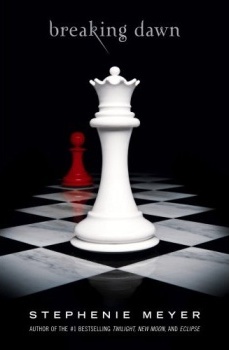
Breaking Down, Chapters 6 - 9
Chapter 6 - There Should be Laws Against This Much Nothing In One Book
* “My entertainment became the number-one priority on Isle Esme.” Ha ha, became! Who do you think you’re kidding, Steph?
* “I knew what was going on. He was trying to keep me busy, distracted, so that I wouldn’t continue badgering him about the sex thing.” So stop. It’d be one thing if the story didn’t make an effort to portray Bella as something more than your average dramatic teenager…
“Whenever I tried to talk him into talking it easy with one of the million DVDs under the big-screen plasma TV,” (Isn’t it awesome that the Cullens have things like that?? It’s awesome, right???) “he would lure me out of the house with magic words like coral reefs and submerged caves and sea turtles. We were going, going, going all day, so that I found myself completely famished and exhausted when the sun eventually set.” They’re not even comfortable enough to sit on the couch and chill, Edward has to keep her constantly distracted so that dreaded topic doesn’t come up. How long’s that going to work even on a space case like Bella? Actually, probably a while, if “magic words” like those are enough to throw her off for an entire day. And hell, a glance at his perfect face always dissipates all annoyance she might be feeling toward Eddie.
Bella, you suck.
* Bella tries harder to seduce Edward, trying to make more use of the lingerie and “scanty bikinis” Alice packed for her. Oh god, stop giving me details on Bella’s plans to seduce Edward.
She tries to get him to give on the sex by being willing to hold off on being transformed, saying she’d like to go to Dartmouth and have some “human experiences,” but Edward sees right through it. “You are so human, Bella. Ruled by your hormones.” Wait, so what’s her deal supposed to be?
Eventually Bella starts to freak about the Volturi coming for her, and that with her sheer aura of desperation seems to overwhelm Edward enough for them to do the nasty again. Bella of course feels guilty, but Edward blows it off. “So you seduced your all-too-willing husband. That’s not a capital offense.” The same husband who refused to do it, refused to cut any sort of deal that would include it. How wishy-washy can you get?? Edward’s hardly been able to think of Bella’s own good even while he’s thinking of Bella’s own good before, though. At least she’s consistent about that.
* Bella realizes that getting laid has made her genuinely want to try college as a human and hold off on being turned. And if you think that’s honestly going to go anywhere, I’m going to have to assume you haven’t been paying attention.
* Bella goes to watch a movie while Edward goes to let the cleaners in (“They had more DVDs than a rental store”). I worked at a Blockbuster for a while. We were always getting asked for movies we didn’t have. I’m tempted to say the selection of a rental store’s really not that great, and it’s a lame-sounding comparison to make anyway. Maybe if she’d said, “They had more DVDs than an Amazon warehouse”…
Perhaps more pertinently, Bella’s interests pretty much shrank to Edward Cullen as soon as she moved to Forks. How long’s it been since she was even inside a video rental place? I’d say New Moon but it’s hard to imagine even Bella Swan turning DVD-watching into a life-threatening experience.
Also I just have to love the line that says Edward was talking to the cleaners “in what I assumed was perfect Portuguese.” Because Edward’s perfect. Edward knows everything. She just assumes that by now. Except we’re going to see a huge example of his deficiencies in the very near future.
* One of the cleaners, an indigenous lady, apparently tells Edward, to his face yet, that she thinks he’s something called a “libishomen.” That is, “a blood-drinking demon who preys exclusively on beautiful women.” You might think that the Cullens don’t care about letting these people know they’re vampires, but this sounds like this is the first time the people who clean the beach house have ever had cause to think this.
Also, I can’t find anything about a “libishomen,” so I’ll just quote what a TV tropes commenter had to say: “In Breaking Dawn, a Brazilian cleaning woman recognizes Edward as a "libishomen". Ignoring the fact that it's Lobisomem, that particular Portuguese myth is a werewolf and not a vampire. To make matters worse, the lobisomem looks like a man-ape, so it should have been impossible for Edward Cullen to be recognized as one."
Why exactly is she telling the guy who she thinks is a monster, that she thinks he’s a monster, though? Her concern is for the could-not-be-more-obviously-pregnant-if-you--built-a-50-foot-neon-sign-next-to-her Bella, who doesn’t speak her language, yeah. But what purpose is telling the monster he’s a monster meant to serve? I dunno, what if she was right? Won’t that just double the body count so she doesn’t go home and tell her people the guys who own that island are libishomens? She’s not, I know, but what IS the thinking? Is there any?
* Apparently it doesn’t even matter that this might be the love nest of a demon, since the cleaners just come in and get to work. Boy I wish I could say I was surprised. Within a page Bella forgets they’re even there and ponders sex again, which they leave to have.
Chapter 7 - It Took This Long For the Plot to Get Started, Aren’t You Filled With Confidence?
* Bella has another nightmare about the Volturi, and I don’t care how many times you tell me otherwise, until you show them being scary, I’m not going to believe you when you say they are.
“And then, like a burst of light from a flash, the whole scene was different.” Just for the record, that’s what a flash is. A burst of light.
She wakes up to find a note from Edward that he went to the mainland to hunt. Guess it would’ve been too mean to have him eat one of those cute porpoises Bella went diving with in the last chapter.
“We seemed to exist outside of time here, just drifting along in a perfect state.” Imagine the impact of that same sentence coming from someone not disconnected from reality as the rule and not the exception. She totally forgot about other people being in the house because she was getting horny again in the last chapter, remember? Ditto for when she watches CNN later and notes “we’d been so out of touch, world war three could have broken out and we wouldn’t have known.”
* More signs of impending about-to-be-a-mommy-ness. Bella gets nauseated by food and decides she doesn’t want to go back “to the hot room.” So turn on the AC? Do they seriously not have that? They have plenty of things to make them look normal at their house in Forks nobody visits, why the hell would they skimp on the charade on a property normal people actually do come to? Why do I even ask anymore?
Guess not, since when Edward gets back he promises, “I’ll have an air conditioner installed before I leave again.” Edward, I’d say you suck at foresight, but it sounds like your dad sucks at it too since this is his and his wife’s private retreat. Next you’ll tell me Edward forgot to get a bed for the house he bought near Dartmouth for them (because he did. Buy a house there).
* Bella realizes her period’s late, and yanks her shirt up. “I had absolutely no experience with pregnancy or babies or any part of that world, but I wasn’t an idiot.” You don’t need me to say anything by now, do you? “I’d seen enough movies and TV shows to know that this wasn’t how it worked.” Well, if you’re going by sensationalized Hollywood depictions, maybe you are an idiot. I can’t help myself, can I?
She moans to herself, “there was no way I could be pregnant. The only person I’d ever had sex with was a vampire, for crying out loud.” It’s like she somehow tapped into the author’s mind and got used to there being no consequences to anything, and got complacent.
She remembers her research on vampires from the first book, and stuff like succubi and incubi. Then she thinks about Rosalie’s frustrations about not getting to experience motherhood, and realizes there is a difference between the two of them.
Damn. Now I really have to ask what the Cullens do with their immortality. Carlisle’s been alive for three and a half centuries. Apparently neither he nor even the Volturi, the oldest of whom have been alive for somewhere around thirty centuries, have ever asked what happens if a male vampire has sex with a human woman (hell, if a male human has sex with a female vampire). No, it’s just nothing happens when vampires have sex with each other, so nothing could possibly happen if a vampire has sex with a non-vampire.
I don’t know, but Carlisle gets kind of excited at getting to study something like this when they get home. You’d think at some point it would’ve occurred to him, and it’s not like he’s lacking for time to run scenarios or come up with a list of what-ifs. If not for that, I almost could’ve believed this just never occurred to anybody in the book.
* I know it’s said that normal vampires wouldn’t have the restraint to have sex with a human and not drink their blood, but that ties into two of the books’ shortcomings. One is that we spend all our time with the Cullens, and the other is that because Bella’s the POV character we hardly ever see non-veggie vampires. Even the non-veggies we see tend to come across as civil and restrained. Aside from Jasper’s slip in New Moon, the Cullens can talk all they want about how hard they have to fight their urges. But after a while all the civil, restrained vampires make civility seem like the norm, and that makes sparklepires as a species look pretty safe except when they take a direct interest in killing a specific person.
Because being around vampires seems so safe on the whole, it seems kind of weird nobody would ever get the desire to have a liaison with a warm body again, just to remember what it’s like. And if so, then it seems kind of weird nobody knows that impregnation with humans is possible.
* Alarmed, Edward calls Carlise, and Bella isn’t sure how she’ll talk to him. “Would he laugh at my conclusions, tell me I was crazy?” Does that sound like the guy who invented feeding on animals because he thinks enough of humans not to want to kill them or vampify them if they still have lives to live?
* I will admit that there’s a nice bit here, and it’s the revelation that she’s going to have a baby causes Bella to grow up a little. Think that maybe there is in fact more to life than Edward’s perfect face and Edward’s perfect dick. That maybe being caretaker for a life is a good thing.
Granted, very little’s actually done with it, but having that moment was kind of nice.
* Bella then wonders why Edward’s suddenly so angry, and “I was sure I had it. He must be so worried about the baby. I hadn’t gotten around to freaking out yet. “My brain worked slower than his.” Oh and he’s gotten so much use of it, hasn’t he? He just overthinks everything, doesn’t he?
* Sure he does, since he immediately identifies Bella’s fetus as a threat to her and decides for her that Carlisle’s going to get it out. I suppose I’m meant to be appalled at Edward immediately deciding to do this with no input from her, but let’s us be reasonable if we’re going to ask the characters to be. This is something totally unexpected (however dumb that is), something he has no idea how to deal with, and something that could very well kill his wife. He’s protecting his dearest loved one from a bad spot he put her in. I haven’t got an opinion on abortion, but I don’t know that I totally disagree with him here.
* The cleaning lady shows up and starts yelling at Edward, implicitly over what’s happening Bella (who cares?). And it goes on for a little while even though, as usual, our POV character is totally out of the loop. She says things like Edward starts to sound pleading and begging but that’s of pretty limited usefulness when we have no idea what’s being said. Keep it short and to the point, okay?
We do actually hear one word of the conversation. “Morte.” “I knew enough Spanish for that one.” What if I don’t? What if I’m a tweener who thinks studying foreign languages is stupid? These books were, theoretically, being marketed to that age group, right?)
* “As if I could discount something because it was a legend. My life was circled by legend on every side. They were all true.” No, is that what all the vampires and lupine shapeshifters mean? The first sentence would’ve said plenty by itself. So we’re going from no help, right to too much.
Incidentally, didn’t she have a line somewhere back where she was flat-out annoyed with how many legends were turning out to be true? Hell, I seem to remember at one point she was dismissive of the Quileute legends of werewolves, and that was after she found out vampires are real. Yeah, not being dismissive of legends when you live up to your neck in them makes sense, but when did that start happening for Bella?
* Close out Book One on Bella tearfully calling Rosalie for help. It doesn’t say what for, but I bet you don’t have to guess it’s bribing Rosalie for protection with the promise of a baby around the house.
Book Two: Jacob, Chapter 9 - Waiting For the Damn Fight to Start Already
* “Preface - Life sucks, and then you die. Yeah, I should be so lucky.”
Um, what in the hell??
* As the heading indicates, we now switch over to Jacob’s perspective. Implicitly, this and the epilogue to Eclipse were in response to readers who didn’t like Jacob to help them understand him better.
Also, rather than Bella’s brief and often tangential chapter titles, well, that really is the title of the chapter, not one of the snarky ones I’ve been substituting.
* We open on Jacob griping that some werewolf named Paul has imprinted on Jacob’s sister that I don’t remember ever hearing about. Durrr, I wonder where Steph could be going with this after we just found out Bella’s pregnant!
* Jacob’s griping wanders off into what convenient excuse the Cullens will use for Bella not coming back from her honeymoon, or if they’ll even bother and just suddenly disappear into thin air one morning. He fantasizes about getting the pack and going out to get the Cullens (fantasizing because he’s already been turned down by the others). The thought’s a sweet one because he knows Edward well enough to know that if he does get any of the others, Edward will come after him without a thought. Because Edward over thinks everything, and never seizes upon his first emotional impulse.
* Then Jacob goes to see another werewolf who’s playing with the girl he’s imprinted on. The little girl. Who just turned three. Ewwwww. I don’t care how Meyer tries to justify this, this is a grown man grooming a girl who can’t even tie her shoes yet to grow up to be his wife. Ewwwww.
Also, the other werewolf’s child bride “pulled his hair like a horse’s reigns.” A reign with a G is something you can’t touch, so no. Think about it like this: once upon a time there was a cartoon called Reign. It was about Alexander the Great. What spelling of the word do you think was intended?
Jacob says the werewolf’s way more jazzed than any parent would be to play “stupid kiddie games” with his underage paramour. What does that even mean, that Jacob’s just a cynical bastard who doesn’t know what parenthood’s like? Or is that true, because the child the book focuses on is mentally older than her parents within a few weeks of being born? I’m just asking because in the next chapter Jacob makes some surprisingly accurate observations, implying he has a pretty good handle on life in the real world.
Anyway, the other werewolf suggests that maybe Jacob trying to get a date, or a life. So what’s the message on that one? Is the series finally admitting how pathetic its main characters are for obsessing over Bella?
* Sam howls for the pack to gather, and Jake runs off, wolfing out with a “silent shimmer that made me something else.” Uh, listen, it’s cold! Shimmers are light, they’re visual. These couple chapters are making me wonder if Steph understands what light is.
The meeting’s because they’ve heard Bella’s back from her honeymoon and suffering from some kind of “rare disease in South America,” wink wink. None of them but Jacob want to attack, though, since they don’t have any proof. How law-abiding for a bunch of mystical warriors. Kind of calls all that car theft and such on the Cullens’ parts into focus, maybe?
Sam hits Jacob below the belt asking “Are you sure this is what you want? Is it really the right thing? We all know what she wanted.” Even after saving her from diving off a cliff. As they say, Jacob’s probably just a glutton for punishment.
Then Seth hits Jacob below the belt, asking what Jacob’s going to do when Bella fights on the Cullens’ side. I wonder if his opinion of her’s colored by his opinion of Edward, as if becoming a vampire makes you tough. I kinda see Bella curling up into a ball as her mind shuts down at the horrific spectacle of two factions she both considers friends fighting. Like she has every single time something bad’s happened.
“She’s not Bella anymore,” Jacob retorts. Who is Bella, exactly? Even the author’s said she avoided describing Bella more than she had to in order to make it easier to insert yourself into her shoes.
* “Nope, the pack wasn’t attacking anyone today. But I was.”
Over Bella.
Chapter 9 - Sure As Hell Didn’t See That One Coming
* You were the only one, Jake.
* Jacob retreats back to his place where he talks to his dad about his newly-revealed sister, and we hear “It’s hard -- the girls were older than you when your mom passed,” and if not for her new boyfriend “she probably would have taken off again real quick. Maybe that was why Billy didn’t kick him out.” Gee, it seems like she was only introduced to also introduce some quick pathos. Also seems like the author still thinks a guy’s the only thing that matters to a girl.
Oh, and also sayeth Billy, “She’d rather sleep on the floor than lose you.” Show it. Let us see this character’s face. Let us see how she acts toward Jacob that she feels close to him. With all the space Meyer had to work with, is that asking so much?
* Jacob heads over to the Cullen house, planning his strategy (mainly forcing his way in, seeing Bella and wolfing out so the others can have their evidence and attack), but Carlisle politely meets him at the door. “Carlisle was just so…human or something.” So please tell me and tell me true, Steph, what a sparklepire is. With all the space Meyer had to work with, is that asking so much?
* Carlisle lets Jacob in since he’s not an evil lord of the night, and Jake sees Bella really for real is sick, it wasn’t just a story. Also, Rosalie’s hovering around her protectively because this is the only chance she’ll get to be this close to being a mom. Even Edward points out in a bit, “Bella’s life means nothing to her.” Which Bella’s exploiting. I dunno, maybe if these books actually had complex morality instead of just pretending they did, that’d work.
Rosalie, or “blondie” as Jacob takes to calling her (it’s not like she deserves something more flattering) “was easier to ignore than I ever would have dreamed.” Wait til you’ve seen things from my side, Mr. Black.
* Jacob and Bella talk, with Bella snapping, “sounding a little more like the way she usually talked to me.” Oh you guys are such good friends.
More striking than that his how massively, how quickly, Bella’s got pregnant. “There was no way she could be pregnant. Not that pregnant. Except that she was.” Even a werewolf’s chained by ideas of normalcy.
Edward takes Jacob aside and explains why nobody’s done anything about this fetus, which is plainly killing its mother. Bella won’t let them. “Jeez, she was running true to form. Of course, die for the monster spawn. It was so Bella.” In a little bit we also get, “Make Bella see sense? What universe do you live in?” Although if you kind of think about it, that kind of awareness coupled with Meyer writing Bella in a minimalist fashion could be read as “Bella thinks this/acts this way because it’s the easiest way to advance the plot.”
It’s a little bit nice the author seems to be acknowledging the shortcomings of her story, but you’d think she might take the opportunity to fix it. This is a perfect chance for everybody to grow up and fill out as characters. At the very least, she could explain why it’s laudable that Bella’s always so willing to throw her life away. Or when Edward says Jacob couldn’t possibly hate him as much as he hates himself.
* Then Edward does something that’s earned him a lot more condemnation, but again this time…I’m not so sure.
He tries to get Jacob to talk Bella into aborting the baby, with the alternative of having “puppies” with Jacob instead. Who presumably won’t eat her from the inside out. Although I don't see any particular reason their wolf mojo couldn't manifest right in Bella's womb since she'd still be married to Edward and presumably still surrounded by vampires. Oh, like big, mature Bella could stand to be separated from Edward for nine months, and like Edward could resist the urge to be around to do everything for her, no matter how good an idea that would be.
The thing is, Edward doesn’t say that as a derogatory remark when he says it. He comes across as pretty desperate to save his wife’s life if that’s what it takes.
I don’t know if he’d be forcing his will on her if his family hadn’t lined up behind Bella, but…I believe for this moment he wants to save her. Besides, at literally every turn, Bella’s shown she needs to be protected from herself even more than all the vampires after her. I hate both of these characters, but Bella’s history of poor judgment and pointless attempts at sacrifice add up to a bigger negative on her side. And if I were reading this for the first time, how would I know what kind of hellspawn she’d be stubbornly releasing upon the world? This isn’t exactly Rosemary’s Baby, where you can sympathize with the character and get some inkling of why she loves her child even though he’s the frigging antichrist. Bella’s the idiot’s idiot and I’ve had, I think, good cause to hate her since she landed in Forks. Edward kind of wins by default.
* Jacob agrees to Edward’s plan, although I’m not sure if it’s the one to abort the fetus or to kill Edward when the baby kills her.
Tuesday, May 22, 2012
Loonatics Unleashed - Going Underground
Open on Chinatown, where it looks to be Chinese New Year. Because it’s always Chinese New Year. The same way it’s always Mardi Gras.
Lexi (the girl bunny, because I’ve decided I’m just calling everyone else by their old names) and Daffy are getting takeout (because what else would they be doing there?) when Lexi suddenly hears something via her super-hearing and the buildings start to shake. “Comically” splattering Daffy with all the food he was carrying.
Then it starts to shake more, and a guy lets go of a serving cart of more Chinese food which splatters…more on Daffy. Who was still splattered from the first time. Was that supposed to be funny? Er? Then another guy lets go of another serving cart and Daffy teleports out of the way, but a carton flies off and splatters on him anyway. Oh come on, you just did the same stupid thing three times in the same thirty seconds! That doesn’t even count as a running gag.
Then we pan out and it looks like all the ground around Chinatown is sinking, except only one building’s apparently sinking, a big purple one with an atom symbol on the side. I know you were making this for kids with tiny attention spans, guys, but if you don’t care why should I?
Then that whole part of town on the hill sinks into the ground instead, so was that part being raised up? So why does it sink into the ground from up there…forget it. Although I’m kind of curious if they’ll try to explain how nobody was inside those buildings when they collapsed and didn’t get crushed.
Then a nerdy-looking midget walks up to a glowing green jewel and laughs after saying “there’s going to be a whole lot more shaking going on!” Okay, that’s not even a joke. If it was “a whole lot OF shaking going on,” that’d sound dumb but at least it’d be a reference to something. Not that I’d expect this show’s target audience to have heard that song.
After theme song, we return to the Loonatics in their meeting room, and a comment from Bugs enlightens us that the ground wasn’t sinking, that one part rose up. To make that one building sink, apparently.
Wile E. wheels in a miniature rendering of the city but isn’t happy with it because he had to make it “on my break. Total rush job.” Okay, how long was his break? The show doesn’t even explain the characters’ powers, how am I supposed to know their scheduling regulations? Heck, these guys are a superhero team. Not exactly a 9-to-5 job.
Lexi notes the detail’s so extreme it even has little trains that actually run, then looks at her watch and adds “and on time.” That’s not even a joke either. How would she tell that from glancing at her wrist? Does she memorize train schedules? When they get around via jetpack?
The point of the model city is no matter what tectonic variations he tries, Wile E. can’t figure out what would make a little mountain rise up in the middle of town like that. Not that investigations matter, because Zadavia pops in right then to conveniently explain who’s behind this.
One Dr. Thaddeus Dare, a scientist who made it his life’s work to find a way to control rock. Daffy shouts out, “Whacko, party of one!” after that. And he should. I mean, imagine the practical applications of that kind of power, like preventing earthquakes or volcanic eruptions, or digging foundations for a new building in one day.
Disfigured by the meteor crash, he grew more and more reckless until he was “banished by the scientific community.” And not, like, arrested or anything? Just driven out of the scientific community? What’d he do?
“Lemme guess, a guy that into rocks went underground, right?” Bugs posits. Not hard to figure out, are these shows? Kind of makes you wonder why they bothered pretending that those little fuzz balls weren’t the same as those big honkin’ monsters in that other episode.
“Deep underground,” Zadavia answers. And if he was a probable threat, why has nobody done anything about him until now? Anyway she also knows about the jewel he stole, the Jade Serpent Crystal, “said to contain untold energy.” Said to? With all the ridiculous hyper technology on display in this show, that seems like something they could at least tell, even if they couldn’t tell what kind of energy or what they could do with it. Heck, it was in some kind of research lab when Dare stole it.
Zadavia warns them that if Dr. Dare figures out how to tap the jewel’s energy, “there’s no telling what he might do.” Yeah there is, it’ll have something to do with rocks. Also, it looks like Dare really meant to just steal the building with the jewel and all the ones around it collapsed into the ground by accident. Not exactly awestruck by this bad guy’s competence.
With the exposition dropped in our laps, it’s time to head out and stop the bad guy, with Bugs trotting out his usual line of “Let’s jet!” I thought that was some kind of play on how whenever he said that they’d fly out in their jetpacks, but here, as you’d expect, they hop into a handy drill tank instead.
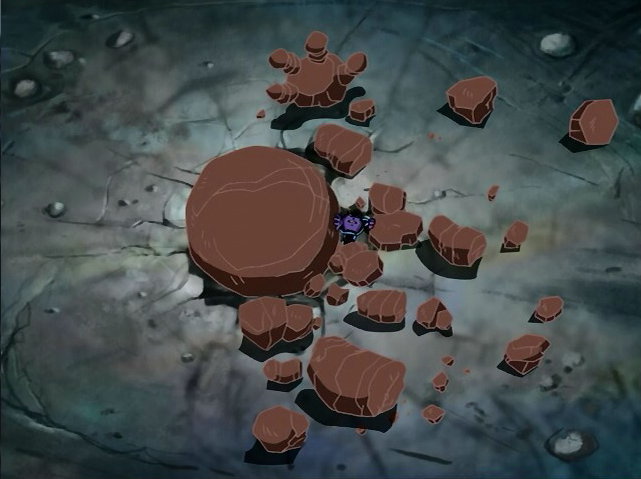
They drive around underground with no indication whatsoever they know where they’re going until suddenly the vehicle’s grabbed by a bunch of rock monsters. One reaches in and grabs Lexi, leading to a not terribly impressive battle sequence. As soon as Lexi gets away from the monster with help from Daffy, she starts shooting lasers from her ears left and right, but didn’t think to turn to the one carrying her and try that.
I will admit this part had one attempt at humor that wasn’t completely terrible, with Bugs spouting off “What’s up, rock?”
Things reach something of a climax when one of the monsters throws Taz off a cliff, and Bugs, attacking it in a fit of rage, knocks it off the same cliff. Right on top of Taz, in fact. Way to avenge your teammate there, dumbass.
Through it all Wile E.’s been trying to get the drill thingy started again, and tries to hook up something to a battery but the cable’s too short. He completes the connection by using his own body and is fried in the process. Which is okay because his power is to heal. Which would’ve been a nice thing for the freaking show to explain.
Then Dr. Dare himself shows up, and as badly-written villains are wont to do, he explains his plan. Which is to drag everyone else underground while he lives on the surface. That’s kind of a new one for mole-man type villains, I’ll admit. It doesn’t really make any sense, but hey, he’s supposed to be crazy anyway. He then uses the jewel to bury the Loonatics’ drill vehicle, and commercial.
We return to Taz digging them out with his tornado powers, even though it’s a tunneling vehicle and digging through rock’s the whole point. Zadavia calls them and tells them that Dr. Dare’s doing exactly what he said he’d do, so they hurry back to the surface and find…the city gone and lots of people still standing around a rocky wilderness? Huh? The Loonatics hop on ATV’s that can apparently drive straight up sheer rock walls to get to Dare’s new castle, which literally has a giant green “come get me, heroes” beacon on top.
Some more rock monsters show up to get in their way, but as in many a badly-written show the bad guys get easier to beat the closer we are to the credits, and Lexi knocks the entire group off the mountain with one ear laser.
Dr. Dare says he thought he left the Loonatics buried, and Lexi hits him with “Haven’t you heard? Down is the new up.” Was that a joke? For real? Then what I have to admit is a not-terrible attempt at humor rears its head when Daffy says they’re going to stop him “stone cold.” That probably only worked because the only character I can stand said it.
Dare uses the jewel to encase them in crystal so he can keep them around as trophies. That is, in crystal up to their noses, so Bugs is free to shoot off some laser vision and hit the jewel, setting them free. Dare tries to run for it, and Lexi and Bugs decided to use some rehearsed acrobatic maneuver to cut him off (#29, if you care), even though he has short legs and they could catch him anyway without any trouble. And it’s not as if any of the Loonatics can teleport.
Bugs and Dare have a sword fight that ends when Bugs reflects a beam that turns Dare to stone. Wile E. uses Dare’s crystal keyboard thing to somehow make the city come back, and I’m suddenly feeling like not watching this show anymore and playing some Torin’s Passage.
We started stupid, so let’s end stupid. It turns out the petrified villain’s been deposited in the middle of a freaking park for safekeeping. Oh yeah, nothing could possibly could wrong. At least it sounds like it wasn’t the Loonatics’ idea, but I can’t shake the feeling it was Zadavia’s…
Lexi (the girl bunny, because I’ve decided I’m just calling everyone else by their old names) and Daffy are getting takeout (because what else would they be doing there?) when Lexi suddenly hears something via her super-hearing and the buildings start to shake. “Comically” splattering Daffy with all the food he was carrying.
Then it starts to shake more, and a guy lets go of a serving cart of more Chinese food which splatters…more on Daffy. Who was still splattered from the first time. Was that supposed to be funny? Er? Then another guy lets go of another serving cart and Daffy teleports out of the way, but a carton flies off and splatters on him anyway. Oh come on, you just did the same stupid thing three times in the same thirty seconds! That doesn’t even count as a running gag.
Then we pan out and it looks like all the ground around Chinatown is sinking, except only one building’s apparently sinking, a big purple one with an atom symbol on the side. I know you were making this for kids with tiny attention spans, guys, but if you don’t care why should I?
Then that whole part of town on the hill sinks into the ground instead, so was that part being raised up? So why does it sink into the ground from up there…forget it. Although I’m kind of curious if they’ll try to explain how nobody was inside those buildings when they collapsed and didn’t get crushed.
Then a nerdy-looking midget walks up to a glowing green jewel and laughs after saying “there’s going to be a whole lot more shaking going on!” Okay, that’s not even a joke. If it was “a whole lot OF shaking going on,” that’d sound dumb but at least it’d be a reference to something. Not that I’d expect this show’s target audience to have heard that song.
After theme song, we return to the Loonatics in their meeting room, and a comment from Bugs enlightens us that the ground wasn’t sinking, that one part rose up. To make that one building sink, apparently.
Wile E. wheels in a miniature rendering of the city but isn’t happy with it because he had to make it “on my break. Total rush job.” Okay, how long was his break? The show doesn’t even explain the characters’ powers, how am I supposed to know their scheduling regulations? Heck, these guys are a superhero team. Not exactly a 9-to-5 job.
Lexi notes the detail’s so extreme it even has little trains that actually run, then looks at her watch and adds “and on time.” That’s not even a joke either. How would she tell that from glancing at her wrist? Does she memorize train schedules? When they get around via jetpack?
The point of the model city is no matter what tectonic variations he tries, Wile E. can’t figure out what would make a little mountain rise up in the middle of town like that. Not that investigations matter, because Zadavia pops in right then to conveniently explain who’s behind this.
One Dr. Thaddeus Dare, a scientist who made it his life’s work to find a way to control rock. Daffy shouts out, “Whacko, party of one!” after that. And he should. I mean, imagine the practical applications of that kind of power, like preventing earthquakes or volcanic eruptions, or digging foundations for a new building in one day.
Disfigured by the meteor crash, he grew more and more reckless until he was “banished by the scientific community.” And not, like, arrested or anything? Just driven out of the scientific community? What’d he do?
“Lemme guess, a guy that into rocks went underground, right?” Bugs posits. Not hard to figure out, are these shows? Kind of makes you wonder why they bothered pretending that those little fuzz balls weren’t the same as those big honkin’ monsters in that other episode.
“Deep underground,” Zadavia answers. And if he was a probable threat, why has nobody done anything about him until now? Anyway she also knows about the jewel he stole, the Jade Serpent Crystal, “said to contain untold energy.” Said to? With all the ridiculous hyper technology on display in this show, that seems like something they could at least tell, even if they couldn’t tell what kind of energy or what they could do with it. Heck, it was in some kind of research lab when Dare stole it.
Zadavia warns them that if Dr. Dare figures out how to tap the jewel’s energy, “there’s no telling what he might do.” Yeah there is, it’ll have something to do with rocks. Also, it looks like Dare really meant to just steal the building with the jewel and all the ones around it collapsed into the ground by accident. Not exactly awestruck by this bad guy’s competence.
With the exposition dropped in our laps, it’s time to head out and stop the bad guy, with Bugs trotting out his usual line of “Let’s jet!” I thought that was some kind of play on how whenever he said that they’d fly out in their jetpacks, but here, as you’d expect, they hop into a handy drill tank instead.
![]() |
| Funny, I suddenly wish I was playing WURM instead. |
I will admit this part had one attempt at humor that wasn’t completely terrible, with Bugs spouting off “What’s up, rock?”
Things reach something of a climax when one of the monsters throws Taz off a cliff, and Bugs, attacking it in a fit of rage, knocks it off the same cliff. Right on top of Taz, in fact. Way to avenge your teammate there, dumbass.
Through it all Wile E.’s been trying to get the drill thingy started again, and tries to hook up something to a battery but the cable’s too short. He completes the connection by using his own body and is fried in the process. Which is okay because his power is to heal. Which would’ve been a nice thing for the freaking show to explain.
Then Dr. Dare himself shows up, and as badly-written villains are wont to do, he explains his plan. Which is to drag everyone else underground while he lives on the surface. That’s kind of a new one for mole-man type villains, I’ll admit. It doesn’t really make any sense, but hey, he’s supposed to be crazy anyway. He then uses the jewel to bury the Loonatics’ drill vehicle, and commercial.
We return to Taz digging them out with his tornado powers, even though it’s a tunneling vehicle and digging through rock’s the whole point. Zadavia calls them and tells them that Dr. Dare’s doing exactly what he said he’d do, so they hurry back to the surface and find…the city gone and lots of people still standing around a rocky wilderness? Huh? The Loonatics hop on ATV’s that can apparently drive straight up sheer rock walls to get to Dare’s new castle, which literally has a giant green “come get me, heroes” beacon on top.
![]() |
| What is this, Loonatics or Biker Mice From Mars? |
Some more rock monsters show up to get in their way, but as in many a badly-written show the bad guys get easier to beat the closer we are to the credits, and Lexi knocks the entire group off the mountain with one ear laser.
Dr. Dare says he thought he left the Loonatics buried, and Lexi hits him with “Haven’t you heard? Down is the new up.” Was that a joke? For real? Then what I have to admit is a not-terrible attempt at humor rears its head when Daffy says they’re going to stop him “stone cold.” That probably only worked because the only character I can stand said it.
Dare uses the jewel to encase them in crystal so he can keep them around as trophies. That is, in crystal up to their noses, so Bugs is free to shoot off some laser vision and hit the jewel, setting them free. Dare tries to run for it, and Lexi and Bugs decided to use some rehearsed acrobatic maneuver to cut him off (#29, if you care), even though he has short legs and they could catch him anyway without any trouble. And it’s not as if any of the Loonatics can teleport.
Bugs and Dare have a sword fight that ends when Bugs reflects a beam that turns Dare to stone. Wile E. uses Dare’s crystal keyboard thing to somehow make the city come back, and I’m suddenly feeling like not watching this show anymore and playing some Torin’s Passage.
We started stupid, so let’s end stupid. It turns out the petrified villain’s been deposited in the middle of a freaking park for safekeeping. Oh yeah, nothing could possibly could wrong. At least it sounds like it wasn’t the Loonatics’ idea, but I can’t shake the feeling it was Zadavia’s…
Monday, May 14, 2012
Thrusts of Justice
Despite sounding like an awful superhero-themed porno, Thrusts of Justice is actually a surprisingly successful blend of comedy and action in a literary format that hasn’t seen any decent worthwhile output from seemingly anyone but John Green in a long time.
While you and some fellow unemployed journalists are BSing plans for the future over drinks, suddenly there’s a strange voice in the air warning of impending doom. Then all hell breaks loose as a supervillain explodes out of the side of a bank, a mech-suited space warrior saves the city from meteoric annihilation, while a grim avenger of the night looks on. Those journalist instincts kick in, and it’s just a question of who to follow, and whether you can really pull off a bit of world-saving on your first time out.
Actually, you probably won’t, because the cover isn’t kidding about how easily and often you’ll die in some over-the-top, sometimes silly way. This works well, though. Both because a lot of the endings are fairly amusing, and it makes a certain kind of sense if you think about it. After all, you’re nothing but a boozed-up former journalist who stumbled into a set of powers you barely understand just in time to have to prevent a global cataclysm with them. No, you probably aren’t any match for the psychotic, revenge-crazed archenemy of the previous owner of your heroic mantle, come to think of it. Even if it does feel a bit like playing I Wanna Be the Guy! after a few deaths.
On the other hand, I did like how the book seemed to be giving me a little respect for the progress I had made after making it a ways in and not meeting a horrible untimely death. Upon meeting other veteran metahumans, they start deferring to your judgment. Rather than feeling like the reason for that is because it’s an interactive book, it feels like you’ve earned the characters’ respect by doing well enough to get that far despite being a complete noob. As often as I was killed, that was rewarding.
The story’s divided into three sections depending on which particular power set you end up receiving. The basic plot behind the book is the same no matter which one you pick, but you’re only privy to certain parts of the story behind what’s going on in each particular section. This was a great motivator to keep reading, to thoroughly plumb each section for something more than just that rare ending where I actually pulled off saving the world.
Aside from the story, though, this managed to be a rare game book where I didn’t mind dying so much because the humor the book’s saturated with works more often than it doesn’t. I chuckled a lot, and a couple times I laughed out loud. I was even going to begin the review with a few of my favorite quotes, until I decided I’d rather let you read this and experience them for yourself. If I have to complain about anything, it’s that perhaps the author leaned a little too hard on getting drunk as a source of humor.
I mean, being a neophyte superhero up against harrowing odds could only be milked so much, sure, but it’s not even consistent. In one section you can find out one of your fellow unemployed journalists also got powers, and you have the choice of either going out and getting drunk to celebrate, or remembering that you’re a superhero now and should probably be out catching villains. In that same section you can run into a pair of retired heroes, and you don’t even get the choice to decline getting wasted with them.
I know, I’m not supposed to take it too seriously, but this same section of the book also brings up topics like the value of life of cloned beings, or the insane hosts of alien shock troopers. You can be funny and dramatic in the same work, but it seems a weird thing to do to combine boozer humor with who decides who’s worth mourning. Particularly since as we all know, superheroes don't drink. Especially when they're on duty.
Also, while there’s no multiple-X content despite the title, there is one part with a makeout session between a pair of retirement-age heroines.
But that said, on the whole I really did enjoy the book. The characters you meet are memorable, and a lot of them are silly and likable enough to add to the experience rather than detracting from it. It was a lot of fun working with a crotchety old lady with power on a par with Superman's, and I'll admit it, I even kind of started to like Ox when he stopped trying to beat my face in. It even includes the “geriatric superheroes” trope and dares to take it in a direction in search of humor other than "here's a bunch of superheroes who you'd expect to be all cool and strong, but they're actually old and decrepit." It has some great twists, I like how the background was revealed with different bits in its different sections, and I liked that you’re not forced to be a good guy. There’s one path where you can become a villain, and save the world to take it over yourself.
Highly recommended. More spoofs should strive to be like this.
Monday, May 7, 2012
Breaking Down, Book One: Bella, Chapters 2 - 5
Chapter 2 - Long Night (You’re Telling Me)
* Things open on Bella telling us how awesome it is to kiss someone like Edward, and how she still can’t believe he acts like she’s “the prize rather than the outrageously lucky winner.” Seriously? Still? It’s like she deliberately refuses to grow as a person.
“I never got over the shock of how perfect his body was -- white, cool, and polished as marble.” I’m sorry, but I don’t see the appeal of cuddling up with a statue. Could somebody explain that to me? Is it something you are or you aren’t?
* Then I get confused because Bella mentions how some kind of “glitch” in her brain keeps Edward out as much as she’d love to let him in. As if she does suddenly care about bringing new people up to speed. Also, you’re not fooling anyone, Steph. The only things wrong with Bella are the ones the characters never acknowledge.
* It turns out Edward’s skipping his bachelor party to be with her, kissing. I’m sorry but is that all they do? I bet if I got the chance to ask Meyer she’d say part of being a vampire is you don’t get bored with the things you enjoy anymore.
“Bachelor parties are designed for those who are sad to see the passing of their single days.” How enlightened of him. Of course if you didn’t want your single days to end, all you’d have to do is…not get married. Sounds like someone with the wisdom of ages, all right.
Then they discuss getting intimate, but Edward gets antsy because he’s afraid of hurting her. She assures him she’ll be fine, but her thoughts betray something other than faith: “He wasn’t getting out of this deal. Not after insisting I marry him first.” Yeah.
* More blathering about all the things and people Bella would be giving up by becoming one of the sparkly dead. Which is all perfectly valid, and not just hot air put in an attempt to create drama by an author who can’t stand to actually put her Sue in an uncomfortable spot.
Some more blather about how Bella isn’t entirely looking forward to finally meeting the Alaskan vampires at her wedding. Because they’re friends with the Cullens and are bound to be so beautiful and blah-de blah-de blah. Steph, if you honestly think I think Tanya’s going to say anything at all except Bella and Edward are the perfect couple and she couldn’t be happier to see this union taking place despite not even knowing the girl…
* Bella remembers Carlisle explaining to her the tragic history of the Alaskan vampires. I’m sure it’s all very heartfelt stuff, but you know what would be even better development for the peripheral characters? Not making them peripheral characters. And with how much they’ve been talked about as being the Cullens’ best buddies, it’s kind of mystifying we’re only about to see them for the first time, isn’t it?
Anyway, to explain this without recanting every single detail, their mother turned a little boy into a vampire. He was so beautiful and enchanting he couldn’t be resisted (because vampires are pretty. Have I ever told you that, Bella?) Because vampires are frozen in time, however, kids turned into vampires act exactly like hyperactive kids with awesome physical powers and the Volturi made it against the rules to let kids be vampires for the sake of their secrecy. So they had to kill the Alaskans’ mom along with the kid vampire.
Then Bella has some kind of dream or prophetic vision or something (I’m honestly curious whether her dreams about werewolves and this are meant to be visions or just Bella’s overactive imagination going into hyper drive. The chapter summary in the guidebook doesn’t even mention it). It’s of an impossibly beautiful child that she feels she must protect from the approaching Volturi, even though when she gets closer she sees him sitting atop the corpses of the kids from school we don’t care about, and Charlie and Renee. Yes, I’m sure something even remotely like that will happen.
If you guessed this was mainly awkward setup to involve the Volturi later, well…these books aren’t too hard to peg, are they?
Chapter 3 - Formality To The Saix
* Bella wakes up feeling “a little annoyed with myself. What a dream to have the night before my wedding!” Those kinds of dreams seem the norm for her. And if she’s annoyed thinking that, maybe it’s time to try to stop wallowing in her delusions of inadequacy? Somehow I don’t see that with Bella meeting Charlie over breakfast, and Charlie admitting that he has “the lesser ordeal” having to wear a tux because Alice is going to be dolling Bella up all day. And boy, don’t those girls sound like the best of friends?
Also for some reason it’s pointed out that “Charlie had taken the entire day off for the wedding”. Um, yeah? I can understand Charlie wanting to spend as little time with his daughter and the Cullens as possible, but I don’t think that’s what Steph meant. When my kids get married, I sure as hell don’t plan to only be there for a little while. Then again this is Bella thinking this, and all indicators point to her wanting this over with as soon as possible so she can finally get some nookie.
* After Alice works on Bella for a while, Rosalie shows up “in a shimmery silver gown with her gold hair piled up in a soft crown on top of her head. She was so beautiful it made me want to cry.” Then cry. Admit you’re a whiny little baby no matter what you’re dealing with after all.
Also, what the hell do I know about fashion design, but silver clothes always sound really chintzy when I read about them. “Piled” doesn’t sound the least bit glamorous, either.
* Most of the rest of the chapter is endless goings on meant to show everyone’s enjoying this but Bella. And all the luxurious crap being heaped on her for being alive.
Like Charlie and Renee present her with silver combs from her grandma. The jewels used to be paste, but for the occasion they were replaced with real sapphires. “Alice wouldn’t let us do anything else. Every time we tried, she all but ripped our throats out.”
So wait, who was shelling out for real sapphires? It almost sounds like Alice forced Bella’s parents to pay for it.
Also, yeah, Alice is definitely not Bella’s friend. Bella hates this dress up stuff, and Alice must know that, and she makes Bella indulge her because she knows Bella won’t say no and Edward thinks too much of her for some reason to make her lay off his girlfriend.
* As soon as she’s next to Edward, Bella’s mind goes numb, as usual, and she takes about a page and a half to sum up the entire ceremony, only really snapping out of it when it’s time to kiss. Then they kiss, and her obligation to Edward is fulfilled and she can get to the part she really wants. How romantic.
Chapter 4 - I Don’t Care What You Say, Jacob’s Not Your Best Friend. He’s Just A Bigger Doormat Than You Are To Keep Coming Back
* “It was just twilight over the river”. I see what you did there, Steph.
* On to the reception, and some of the Quileutes are in attendance. Bella thinks about their deal, that there would be peace only as long as the Cullens never created another vampire. “Before the alliance, it would have meant an immediate attack. A war.” Thank you for spelling that out. “But now that they knew each other better, would there be forgiveness instead?” Or would the Cullens say fnck it, pack up all their suitcases of money and move someplace a couple guys from a reservation in rain-soaked Washington state wouldn’t bother to pursue them? If it would bug the Quileutes that much, why do they only stay where they are and protect it from the vampires that happen to wander onto their territory? Maybe it’s just me being dubious about how damn special Bella is, but it seems kind of far-fetched to me that the Cullens vamping Edward’s wife would be what finally decides to make them go on the offensive and go chasing after vampires.
“As if in response to that thought, Seth leaned toward Edward, arms extend. Edward returned the hug with his free arm.” Sounds like you’re not even kidding yourself anymore, Steph. “Perhaps a stronger truce was on the horizon.” Again, why would the Cullens be so attached to this particular piece of ground except that simply leaving would be a copout unless the author was suddenly willing to make an effort? It’s official that they don’t just live in Forks, they move somewhere else when they’ve been in one place too long for their lack of aging to go unnoticed anymore.
* Mentions are made of Bella’s human “friends,” but you don’t care about that so let’s skip to the Alaskan’s. They don’t actually say Bella and Edward are the perfect couple, but they do happily accept Bella into their extended family, since they consider the Cullens part of their family (then why do they live so far apart?). They also apologize profusely for not helping to fight the newborns and don’t say why. See you later, Alaskans.
* Bella graciously dances with Charlie while “Edward and Esme spun around us like Fred Astaire and Ginger Rogers.” Because lots of teens in the 21st century know who they are. I don’t mean Bella, I mean the target audience.
* Anyway she dances with Edward next and still refuses to believe how beautiful she is, until they look at a mirror and she sees “a dark-haired beauty at his side.” It’s only after laying out everything great about that beauty (the only thing Bella seems any good at) before she realizes it’s her. See?? She was beautiful all along! Which just makes all the denials that much more annoying. I’m just saying, even if you say over and over your character isn’t a Sue, that doesn’t mean they’re not. When has that stopped Steph yet, though?
* “Before I could blink and make the beauty turn back into me,” Edward reveals a surprise for her has shown up. Then suddenly she’s not dancing with him anymore, Jacob is. They get away somewhere private and soon they’re laughing and joking and Bella thinks she’s never done anything to deserve a friend like Jacob, so basically seeing what a beautiful person she is was pointless after all.
As always, though, things get sour when Jacob asks when she’s going to get turned into a vampire, she says probably after their honeymoon, and he implies it’s going to be a pretty lame honeymoon if hitting the sheets would kill her. He makes a crack about them spending the whole time playing checkers, but hell, that’d be something. All they freaking do is kiss and lounge around in each other’s arms. I don’t care who I’m with, I wouldn’t want to spend eternity just doing that.
Things get really ugly when he realizes she fully intends to bum chicka bow wow with Edward as a human. “You can’t be that stupid!” he demands. Uh, yeah she can, and yeah she is. Maybe Bella really is smart, but what’s the point of having something you never use?
Edward comes in and angrily demands Jacob get away from her, and the other Quileutes help break it up, even wolfing out. Are they somewhere with a backdoor they can sneak out of in their remaining rags?
Edward says they need to get back before anyone misses them, and Bella for her part asks herself how anyone could’ve missed that. “Then, as I thought about it, I realized the confrontation that had seemed so catastrophic to me had, in reality, been very quiet and short here in the shadows.” And that’s why I’m not involved in her problems, and don’t believe anything anyone says about her.
* Edward tries to calm her down. “Jacob is way too prejudiced to see anything clearly.” Uh, Eddie? He got mad over something you’ve been worrying about too, which is how you’re going to please your wife in bed without turning her into a greasy smear. Maybe Edward didn’t hear the whole conversation, but with how super-awesome vampires have super-awesome senses, I doubt it.
And I will remind everyone that Meyer claims she writes these books for children, and they were talking about doing the bump and grind.
* Alice then interrupts and asks if they want to miss their plane. “I’m sure you’ll have a lovely honeymoon camped out in the airport waiting for another flight.” I’m a little surprised they’re not saying they own a private plane. Good surprise, though.
Sayeth Bella as they leave, “ ‘Thank you, Alice. It was the most beautiful wedding anyone ever had,’ I told her earnestly. ‘Everything was exactly right.’ ” Because Bella was totally paying attention to anything. Where’s the friendship between these two?
* Then it’s finally enough of this crap, and time for the honeymoon.
Chapter 5 - First Day Of Forever And Already They’re Arguing About How They Can Spend It
* They end up in Rio de Janeiro, and then we get this informed little tidbit. “The taxi continued through the swarming crowds until they thinned somewhat, and we appeared to be nearing the extreme western edge of the city, heading into the ocean.” Because Meyer wanted to get all foreign and exotic but couldn't be bothered to learn the first thing about reading a map, apparently.
* After hopping in an insanely luxurious boat they cruise out into the ocean and Bella asks where they’re going. “ ‘A gift from Carlisle--Esme offered to let us borrow it.’ A gift? Who gives an island as a gift?” Someone annoyingly wealthy with no common sense? Come on, how many fake identities do you really want to keep up at the same time?
* “He set the suitcases on the deep porch to open the doors--they were unlocked.” It’s an island. Not exactly down the street from the Kwik-E-Mart.
Also, I don’t know about Bella, but it seems to me one of the major elements of committing crimes is having a dependable means of escape if you get caught, and there aren’t a lot of places to hide out on open water.
Even if you owned a private island, would you keep anything worth stealing there when you hardly ever go there? This is the first we’ve heard of Isle Esme, and it’s never once been brought to our attention that Carlisle and Esme disappeared for a few days with Bella not knowing where they went. Then again it’s not like Bella’s ever been a narrator worth her salt.
“The room was big and white, and the far wall was mostly glass--standard décor for my vampires.” And with the main reason they’re different, that makes total sense with lots of windows to let the sun in…
* “Had there ever been a honeymoon like this before? I kenw the answer to that. No. There had not.” Cuz yer so speshul. There’s never, EVER been another vampire who fell in love with a human and it played out like this.
Also, Bella complains of the heat. They have power at this place, as we’ll see, but no AC? Not even for the sake of keeping up appearances with the cleaning staff? And they have cleaning staff.
* Edward suggests a dip, but leaves Bella alone to prepare. She digs a little through her bags and “it came to my attention that there was an awful lot of sheer lace and skimpy satin in my hands. Lingerie. Very lingerie-ish lingerie, with French tags.” In a kids book.
Again, I fail to see how this is “clean”. You could make that claim if the scene was a little ambiguous (Bella and Edward are kissing then the lights fade out to them in the kitchen the next morning), but Meyer does everything BUT include the actual sex. Jacob gets angry at finding out Bella’s going to perform erotic acts that could kill her. Bella and Edward go skinny dipping. The morning after the bedroom’s destroyed and Bella feels like some kind of boneless organism. Alice packed lingerie for Bella, for crying out loud.
Eurlgh! Another girl bought racy underwear with Bella Swan in mind. To entice Edward Cullen into having sex with her. I just threw up in my mouth a little.
* So. She follows Edward out to the beach. They go skinny dipping. They talk some about how in love they are and how beautiful the other is. Then things head upstairs and take their course. Offscreen, but nonetheless, in a kids book.
* I could describe the morning after, but I already did, except for Bella’s bruises. Edward’s upset wit himself, but Bella of course sees no reason at all not to do that again exactly like they just did. I wouldn’t even mind if she was actually made out to be a wangsty, hormonal teen instead of anything but. Well, I probably would, but I’d at least give the books points for honesty.
She keeps insisting she’s happy about last night so much that she yells “Why can’t you just read my mind already? It’s so inconvenient to be a mental mute!” That’s a relatable problem! To have to resort to communicating your thoughts to your significant other like some kind of normal person!
“You are killing my buzz, Edward.”
* Edward asked Carlisle what making the beast with two backs was like for vampires, and was told not to take it lightly. “With our rarely changing temperaments, strong emotions can alter us in permanent ways.” Now just hold the damn phone. Which is it, frozen in time or alterable in permanent ways?
Jasper and Emmett told him it was like drinking human blood. “But I’ve tasted your blood, and there could be no blood more potent than that…” Stop me if I’m wrong, but it sounds like they’re trying to come to some kind of understanding. Maybe it’d help to take a somewhat objective look at things? Drop the smarmy hyperbole for once? “I don’t think they were wrong, really. Just that it was different for us. Something more.” Or we could just go along with the assumption that Bella and Edward are special snowflakes doing things nobody’s ever done in the history of forever.
“It was more. It was everything,” Bella adds. Okay now you just shut up, lady. You lost your virginity doing that. You don’t know nothing. This is like when she thought she knew everything in the midst of her first relationship with someone of the opposite sex in her entire life.
* They do seem to get over it and think about breakfast, but Bella has one last thought. “My skin marked up easily. By the time a bruise showed I’d usually forgotten how I’d come by it.” Wouldn’t that mean her bruises would appear more quickly, which would make her even more of a short attention-spanned idiot?
“I sat in one of the two metal chairs and started snarfing down the eggs.” Pardon me, but isn’t that “scarfing”? I admit I haven’t been a teenager in a while but I don’t think Meyer ever was. She comments this is pretty good considering he doesn’t eat. “Food Network,” he replies. Did they start watching after Bella started hanging around? I’m just asking because when they had dinner in the first one it seemed like it was the first time they’d actually used the kitchen since moving in. And while we’re on the subject, if they never cook, do they have an alibi for why the gas works never get any money from them?
And while we’re on the subject of secrecy, Bella asks where the eggs came from. “I asked the cleaning crew to stock the kitchen a first for this place.” I’m just saying, I got the impression the cleaners didn’t know about the vampire thing before coming by while Edward and Bella were there. But then I’ve never bought the Cullens’ act.
We go out on Edward promising never to hurt Bella again. So make her like you, dude. She’ll have all eternity to go to Dartmouth, and it’s not like the bribe put a noticeable dent in your checkbook. But if he did that we would’ve been spared the moronic wrap-up of this “saga.”
* Boy that was 75 pages well-spent.
Monday, April 30, 2012
Breaking Down, Book One: Bella, Chapter 1 - Engaged
Here we go on the final, most aggravating installment in this overblown series. So nobody gets confused, I actually wrote this review in my old style while I was still in the middle of doing Eclipse. The others will be my several-at-a-time format.
1. We get yet another artsy epigraph, this one courtesy of Edna St. Vincent Millay (oh boy am I not looking forward to the one from Orson Scott Card). “Childhood is not from birth to a certain age and at a certain age the child is grown, and puts away childish things. Childhood is the kingdom where nobody dies.” Except all the humans who Bella claims to care about. Whose lives she’s cutting herself out of forever all for the sake of a man she loves for his looks and has nothing in common with except one musician. Not to mention all the poor mortal readers who made this series such a resounding success. I dunno, wouldn't a sign of maturity be the acceptance of endings? Not that it would work with the premise of this super mature Suefic.
Stupid preface, go! “I’d had more than my fair share of near-death experiences; it wasn’t something you ever really got used to.” Yeah well, I kind of think you would get desensitized to anything after enough repetitions. It certainly doesn't help that Bella treats every problem with the same lung-clogging level of anxiety.
“It seemed oddly inevitable, though, facing death again. Like I really was marked for disaster. I’d escaped time and time again, but it kept coming back for me.” It’s all about Bella, after all.
What can you do when it’s not some evil vampire out for your blood, though? If your life isn’t threatened by your own mind-shattering stupidity? “If it was someone you truly loved?”
We’re talking about Bella’s pregnancy, aren’t we?
2. We open on Bella trying to tell herself nobody’s staring at her, “But, because I couldn’t lie convincingly even to myself, I had to check.” Ah, welcome back character who deserved to have Edward slip and bite her head off three chapters in.
“It was still considered rude to stare at people, wasn’t it? Didn’t that apply to me anymore?” Maybe if she wasn’t a complete freak who deserves for people to literally stare holes in her…
As she fuels up her wehicle, the digits on the pump “ticked by sluggishly, almost if they were doing it just to annoy me.” Oh it’s so hard being you, Bella.
Oh, it sure is: “It was stupid to be so self-conscious, and I knew that. Besides my mom and dad, did it really matter what people were saying about my engagement? About my new car? About my mysterious acceptance into an Ivy League college? About the shiny black credit card that felt red-hot in my back pocket right now?” Sue.
Why are people staring at Bella? Well, it turns out her truck died (“According to him.” Trust!) and Edward replaced it with another car that Bella can’t name but which is incredibly impressive (don’t care, said why). We know this because two guys at the gas station gush at the sight of it and ask if she’ll let them take their pictures with it. I am not kidding.
From the sound of the guys’ praise, the car’s basically tankproof. Edward “going a little overboard” looking out for his squishy bride-to-be. Too bad she’s so unused to the thing that when she tried to step on the gas, “the car jolted forward so fast that my body slammed into the black leather seat and my stomach flattened against my spine.” Even if the car’s basically indestructible, it’s still not serving its purpose if Bella can’t drive it, is it? I suppose I should just be glad he’s letting Bella drive herself.
3. In the previous part there’s this paragraph that both baffles and irritates me. It starts with “On the one hand, I had been raised to cringe at the very thought of poofy white dresses and bouquets.” That’s the part that baffles me. I guess she’s talking about her mom not being big on premature marriage, but then, how long did mom know Phil before they tied the knot? According to the guidebook, Bella’s mom “loved being in love.” Granted that line comes from the summary of her youth, but with how Bella was supposedly the real grownup in the household you don't get the impression she changed all that much. Besides, the event that kickstarted the entire plot was Bella's mom getting married again. I don’t know, that’s not very consistent with the idea that this same woman’s militantly anti-matrimony and going to jump down Bella’s throat for deciding to marry so young. And in case you don’t remember, or I didn’t remember to point it out, before Edward came along Bella claims the person in the whole world she was closest to was her mom. Whether that says something about what Bella considers a deep personal relationship or her ability to understand other people in general, I’ll let you decide.
The part that irritates is me Bella thinking that the word “husband” just doesn’t fit someone like Edward. “It was like casting an archangel as an accountant; I couldn’t visualize him in any commonplace role.” Normally I’d be willing to write that off because this is the first chapter, but Breaking Dawn doesn’t do much to make itself accessible to noobs. As I read this book I saw almost nothing where Meyer was trying to explain herself to people not already familiar with her world. That’s okay, in a way, since this is the last book and they’re married by the end of the third chapter. It’s a little late to worry about getting people invested in the characters. For that reason, however, I feel vindicated in thinking SHE CAN STOP TELLING US HOW WONDERFUL EDWARD AND ALL VAMPIRES ARE ALREADY. WE’VE LISTENED TO THIS CRAP NONSTOP FOR THREE BOOKS NOW.
Like I said about Meyer not making this accessible to new readers, after getting gas, Bella drives home and as she does she sees a bunch of flyers up for her “favorite mechanic,” who’s gone missing. When we find out it’s Jacob, that’s it. Her friend Jacob’s gone missing. Nothing about the werewolf thing. Not even anything about Jacob wanting to be doing with her what Edward is. Just a bit about how Billy’s letting Jacob come home when he feels like it despite Charlie’s anxiety. And how Jacob’s friends can hear each others’ thoughts. And how Leah (remember her? I don’t) is a raging bitch. Nothing about how Jacob was supposed to be looking at a significant period of recovery after a “motorcycle accident” at the end of the previous book, and then he just disappeared before that kind of time could’ve passed.
4. Speaking of those flyers, each one felt like a “well-deserved slap in the face.” I’m sorry, I know she thinks of Jacob as her best friend and all, but…I don’t care that she feels bad about this. Putting aside my feelings on Bella as a person, I always knew who she’d pick. I’m pretty sure anybody else who paid any attention at all did too. Including Bella. Besides, by the time I was old enough to know what Bella was up to when she tried to take her clothes off around her boyfriend, I was getting bored with wimpy stories like this one with no suspense and perfect solutions to all the problems (which help with the lack of suspense).
5. Further showing us the deficiencies of Stephenie Meyer’s literary abilities, Bella mentions how “The friendship that had sprung up between Edward and Seth was something that still boggled my mind.” Me too, seeing as we hardly ever actually see character development in action. Or anything indicating Bella even has the brains God gave a mosquito. And Seth? I remember him, because he actually did something fairly significant we got to see!
For that matter, “It was proof, though, that things didn’t have to be this way. That vampires and werewolves could get along just fine, thank you very much, if they were of a mind to.” The way everything has an easy and painless resolution is obnoxious enough in something aimed above a 7-year-old audience, but the way she says that like everyone else was a bunch of children for not seeing it as quickly as she did…Especially when the books have regularly shown her to be stupid, panicky and needing to be reminded of major plot elements. Presumably because she’s devoting too much mental energy to how beautiful such-and-such is.
6. Cut to Edward and Bella waiting in her house to spring the news of their upcoming nuptials to Charlie. She’s nervous, of course, and he tries to remind her “you’re not confessing to a murder here.” “Easy for you to say,” she replies. Does everything have to be pulling teeth with her? Is it just possible there’s something to what all the mean people say about Bella?
When she hears Charlie coming in, “The sound reminded me of that part of the horror movie when the victim realizes she’s forgotten to lock her deadbolt.” Bella can’t even tell the difference between a horror movie and a romance, two of the most diametrically opposed niches of cinema. Remember back in New Moon?
And another classic moment in poor foresight appears when Bella tells us that Charlie had “been putting forth a lot of effort to like Edward more.” Again, if people were saying about my writing what they do about Meyer’s, I wouldn’t leave myself open like that. Besides, is enjoying someone’s company something it makes any sense to have to make an effort to achieve? If Edward's such a great guy, should that require an effort on Charlie's part? Or has he maybe earned the right to be wary of Senor Cullen?
In a touch of very weak humor, Charlie thinks they’re about to tell him Bella’s pregnant. At least, I think it was humor. I’m honestly not sure what to feel most of the time in these books. “What other possible reason would sane people have for getting married at eighteen? (His answer then had made me roll my eyes. Love. Right)” Gee, this really doesn’t sound like a romance comparable to the classics of old. Let alone one that’ll outlive Bella’s period of study at Dartmouth.
7. Edward explains that “I love her more than anything in the world, more than my own life.” I know I’ve complained about this before that’s something that needs more establishing. What does Edward do for fun? What got him out of bed in the morning before Bella? This suicidal devotion of theirs is more unsettling than endearing when they seem to lack any interests in life besides each other.
It’s not helped by being followed up with Bella saying, “For just an instant, listening to the absolute confidence in his voice, I experienced a rare moment of insight. I could see, fleetingly, the way the world looked to him.” Both because Bella seems to be admitting how dense she is, and because that’s all we get. No explanation of how Bella thinks Edward sees the world.
When Charlie asks if this is what Bella wants, she replies, “ ‘I’m one hundred percent sure about Edward,’ I told him without missing a beat.” Says it without thinking. You might think that speaks of the depths of their love, until you realize Bella never thinks before doing anything. Remember the motorcycles?
For that matter, she just wants to get this over with and become an unaging vampire “due to the fact that I was getting closer to nineteen every stinking day, while Edward stayed frozen in all his seventeen-year-old perfection, as he had for over ninety years.” So she’s agreeing to marry Edward because that’s the only way he’ll give her those sparkles she wants so dearly, and not so much because she dearly loves him and wants to give back some of what he’s giving her? “Not that this fact necessitated marriage in my book…” Guess not. What happened to her agreeing to wait on becoming a vampire because she finally realized she was being kinda selfish?
Edward asks for Charlie’s blessing on their union. “I’d like to do that, well, the right way. It’s how I was raised.” Bella adds, “He wasn’t exaggerating; they’d been big on old-fashioned morals during World War I.” We noticed the “as he had for over ninety years” bit, but thanks for reminding us. I mean, insulting our intelligence. I don’t remember Bella ever coming out and declaring her contempt for her listeners like that. Who’s she telling this story, anyway? I know most stories with a first-person perspective don’t worry about that question, but between all the “Edward was so pretty” and “I totally suck” moments, I kind of have to wonder who’d ask her to tell the story of how she and Edward got together and still be listening after all this garbage.
8. Charlie agrees, but cackles that Bella has to break the news to her mom herself. “The ultimate doom: telling Renee. Early marriage was higher up on her blacklist than boiling live puppies.” Save the drama for the drama, please. This is (a big part of) why the climax to this, the entire “saga”, makes a wet thud when it arrives.
Anyway, Renee isn’t upset that Bella’s getting married right out of high school. At all. In fact she encourages Bella “that you know what’s best for you.” I’d argue that Bella’s track record indicates otherwise, but she wouldn’t know about those. Mom continues in this vein, assuring her spawn that “You’ve never been a teenager, sweetie,” and “My little middle-aged child. Luckily, you seem to have found another old soul.” If not for this kind of shit, I’d say Meyer captured the voice of her protagonists perfectly.
And really, the fact that Bella invents problems where none prove to exist just helps you to see how few problems she really has to deal with.
“It let me right off the hook. Edward’s family and my family were taking care of the nuptials together without my having to do or know or think too hard about any of it.” It’s so hard being Bella.
This conversation actually shows us another of Steph’s failures to show and not tell, because the main reason Bella’s mom is so sure she and Edward will work is what she saw when they visited her before. You remember, in Eclipse? No, you don’t! Because they were going, and then they were back! We never saw Edward charming his future mother-in-law. It’s like Steph’s only realizing now that she actually has to write Bella’s mom in at some point if Bella’s so concerned about said parent’s view of her marriage.
And before I close this point, I just want to say that having Bella say “But aren’t you going to say that I sound exactly like every other infatuated teenager since the dawn of time?” doesn’t distract at all from how fake the romance comes across.
9. By the way, the scene transition between Charlie telling Bella she had to talk to her mother about this and Bella doing so was incredibly awkward. It starts with the sentence “I paused with my hand on the doorknob, smiling,” as if she’s thinking back on the conversation with it just having ended. Since it goes on to say that Renee’s helping Esme plan the wedding by phone, it sounds like Edward flew Bella across the country just to ask her mom that one question. I know his family’s got money to burn but damn, was that really necessary?
10. Alice gets Charlie a tux, and he says he looks like an idiot, and she fires back that “No one dressed by me ever looks like an idiot.” Stop it already, Steph. I know the series is almost over, but you could’ve at least limited the damage with how insufferably perfect your vampires are. Yes, it does get tiresome if you think about it. No, thinking about literature isn’t a bad thing to do.
But then it’s Bella’s turn, and she “saw the dreaded white garment bag,” and screamed a little. Bella and Alice are supposed to be like BFF’s or something, right? Then how come whenever they interact, Alice seems to be doing something that exasperates Bella? Who lets Alice do it anyway because she has no backbone.
Bella prepares for that dreaded moment where she tries on her wedding dress. “I stripped down to my underwear and held my arms straight out.” Eeewww.
Look, I’m sure that no matter how hard she pretends otherwise, Bella’s not hard to look at. But I’ve been inside her head, heard her innermost thoughts, and what I’ve seen there isn’t appealing. Being asked to imagine her with no clothes on actually only serves to make her less so.
11. Alice tells Bella to go to her happy place for this part, and she does, but the only thing definite about it is Edward’s there with her. “[B]ecause Edward was keeping the location of our honeymoon a secret to surprise me. But I wasn’t especially concerned about the where part.” Sorry Steph, I’m really not finding this romance believable when Bella has yet to concern herself regarding anything about their relationship besides getting immortality. Like, is this somebody she can really spend eternity with? Of course she can, because vampires fall in love for life.
“Edward and I were together, and I’d fulfilled my side of our compromise perfectly. I’d married him. That was the big one. But I’d also accepted all his outrageous gifts and was registered, however futilely, to attend Dartmouth College in the fall. Now it was his turn.” Oh isn’t that wonderful, her part of the deal they’d made was that she’d accept all of these extravagant gifts from him before she’d accept the most amazing gift of all. Haven't we come such a long way?
I suppose if Meyer were to read this she’d defend her work by saying Edward’s the one with all the money and power and connections, but could Bella be a little excited about what’s going on, maybe? Quit acting like admission to a high-level college and all the others things Edward’s lavishing on her are obstacles to overcome before she can get what she really wants? This doesn’t sound romantic at all. Plus she’s hardly seeming like a developed character, even after three gigantic books, when Edward remains her only goal in life.
12. Building on my last thought, Bella ponders on how she’ll change, psychologically, when she becomes a vampire. You know, when you write on a blank slate, you’re filling a void, not changing what’s there. “For several years, my biggest personality trait was going to be thirsty.” Which isn’t a personality trait. I’m fine with calling topaz a color, but “thirsty” isn’t a personality trait. Neither is “obsessed with undead pretty boy.”
“And even when I was in control of myself, I would never feel exactly the way I felt now. Human…and passionately in love.” Huh? Isn’t that what Edward feels toward her?
Oh dear lord I’m only 22 pages into this 754 page book. Someone please kill me.
Monday, April 23, 2012
The Seven Deadly Sins of Twilight (or The Only Things I Ever Talk About Anymore)
A while ago I felt like I stopped complaining so much about things like how the Twilight series is horribly misogynistic and any number of higher issues to focus on how it offended my sensibilities as someone who fancies himself a storyteller. To close out Eclipse and look at how far I’ve come, I thought I’d lay those out and say just where the most heinous examples from each book were.
I’m aware there’s some overlap here, both with the problems I’m listing and the examples I use. I’m okay with that. I’m also aware of using a couple examples from Breaking Down. I’m okay with that too.
Why don’t we jump right into how the story…
Plays it too safe.
Let’s be clear: as an author, you should strive to have your characters act in an intelligent and semi-realistic manner. For that reason, I agree it makes sense to keep the squishy Bella away from the dangerous happenings whenever possible, and use their precognitive to warn them of incoming danger. The catch is it’s also important to strike a balance between having your characters do what’s smart, and showing things that are interesting to read about. Like oh, anything but having the narrator sit around in a house or motel miles away from whatever’s driving the plot.
Just saying, it’s a not a small copout when tons and tons of effort’s put into establishing that a big battle with a fearsome force is coming, only to find out it’s going to happen someplace else while we get to listen to Jacob and Edward bickering over the affections of an unlikable ninny. Slightly less aggravating is hearing, and never seeing all of Victoria’s failed attempts to get past the Quileutes to have a chance at killing an unlikable ninny.
If you’re going to include all this conflict, all these people gathering for battle to show the depth of their convictions (or if we’re not kidding ourselves, how damn special your Sue is), why on Earth would you not show it? I don’t demand that books with superhuman beings include epic battles, but if you’re going to go that route and yet not show any of it, I don’t see why you’d go that way for drama at all.
Or maybe the author’s just a wimp who wants people to think she’s tough by using battles for drama, but doesn’t actually have the cajones to show something unpleasant. If you’ve read Breaking Dawn you’ll remember that the middle third or so is told from Jacob’s perspective. At one point he comes back from a run to find out Leah the werewolf told Bella off for continuing to string him along even after choosing Edward, marrying Edward, and being in the process of having Edward’s baby. Not only did we not see this awful harangue, everyone else thinks Leah’s just being a bitch to poor Bella. Including Jacob.
For that matter, having Alice around to foresee nearly all threats eliminates, accordingly, nearly all of the element of surprise the danger provides. It’s kind of cute, but mostly desperate the ways Meyer comes up with to weaken or phase out this awesome ability. Despite the decision to make its owner one of the most prominent characters. If you not only keep the main character out of all the exciting parts, but we have plenty of forewarning that something dangerous might happen (and usually a more-or-less exact idea of when and where it’ll happen, usually on the field where they played baseball in the first book), what exactly is meant to be dramatic about all this if have plenty of advance warning of something we won’t get to see anyway?
And it isn’t just fighting; there are indications that Meyer does have potentially entertaining character interplay too. The thing is, probably because her potentially interesting ideas usually have nothing to do with romance, none of it seems to involve Bella, Edward and Jacob.
Those potentially interesting ideas include a fairly elaborate mythology and complex genealogy of the Quileute tribe. But if the person who we rely upon to give us all our information is so focused on her boyfriend’s sparkly cheekbones the elaborate mythology feels like something merely thrown in for color, maybe it might as well not be there?
Related to my other complaints, and just as annoying, is when everyone else seems to be in on some big development, and Bella’s the last to find out. Like when she finds out Jacob’s in love with her too.
If we don’t get to be around for anything that could’ve made these books interesting, and are kept in suspense about things anybody could predict, what do we get instead? Talking. Interminable. Talking. About vitally important things like the men in Bella’s life, or how she’s not happy being a human. Or if we’re really lucky, talking about that fighting and tracking we don’t get to see.
Let me stress that the narrator of a story being largely a spectator doesn’t automatically doom it. But it’s really hard to make that work when they’re the reason for everything that goes on.
For a successful example of non-involved narrators, I’m thinking of the early Callahan’s stories by Spider Robinson, where Jake Stonebender’s usually just another guy who happened to be at the bar the night something weird happened. There were stories with him at their center, sure, but not all that many really.
The important points of distinction are that he was around to tell us about something worth reading when it happened, and the narrator was usually just another face in the crowd. Not the center of the fictional universe. Callahan’s had an ensemble cast it actually used.
Speaking of ensemble casts, it’s hard to get worked about the welfare of the…
Legions of pointless characters.
Near the beginning of Eclipse we hear about vampires murdering people in Seattle, and reading the victims’ names Bella starts to fret over how these aren’t just names, they’re people who had families and jobs and pets and Xbox Live accounts…None of them really mattered for anything other establishing that somebody was on a killing spree, but that’s the problem. It’s the tip of the iceberg of Meyer’s apparent belief that every face in her story needs a name and complete identity. No matter how inconsequential to the story they might be.
Having a diverse cast of characters in your book can be entertaining. However, that needs to be balanced with knowing that you shouldn’t just have one, it should matter for something. Especially if you’re going to base major plot events on some of the smaller elements.
Yes, I’m mainly talking about the practically faceless Harry Clearwater, and how his untimely demise prompted Edward to seek assisted suicide.
That’s just the worst example. There’s a party during New Moon where a bunch of other people (from the reservation) are mentioned like their names ought to mean something. More of the same when Bella goes to hear the legends in Eclipse. Then later we might hear how such-and-such is having a rough time because such-and-such died, or because such-and-such turned out to be a werewolf. Or when Jacob talks about how stuff’s happening to his fellow werewolves, as if I know how any of them are different besides Jacob (because he’s the closest thing Edward has to a rival) and Sam (because he’s the leader). And maybe Emily (because she’s Sam’s girlfriend. And she’s ugly). Jump right off the page, don’t they?
Or the Volturi? We meet them one time, and then we’re supposed to know who all these names are, what so-and-so wants and how so-and-so has such-and-such a power. Even though the only time we see them again before the very end of the series is when some of them show up at the end of Eclipse for no good reason. In Breaking Dawn much ado is made about a Volturi named Demetri, specifically because of his power to find people. I don’t think he gets more than a line or two in the whole series, but over and over Bella and Edward think that if anyone’s to be able to survive the Volturi’s wrath, he has to die. He wouldn’t be worth bringing up at all, if not for his power.
Incidentally, if you can remember that far back, Demetri was the Volturi member at the end of New Moon whose name I refused to remember that close to the end of the book. He was relevant to the story then for exactly the same reasons he was at the end, because he had a power that made it so hiding from the Volturi was off the table. He was literally a shiny plot device. It was one thing when he was mentioned briefly at the end of one book, but they started relying on that more toward the end of the series. It just got more transparent.
The book hardest hit by this is Breaking Dawn, when (besides leaning even harder on Demetri) the other vampires the Cullens call in to reinforce them show up. There’s about twenty of them, and aside from the Alaskan group, who got most of a chapter to themselves, they’re all introduced in the span of one chapter. Apparently that’s enough for them to be three-dimensional characters, let alone for us to be able to tell them apart, let alone give a shit about what happens to them, because a lot of the book after that is mentions of such-and-such a vampire doing something like we know who they are. There’s an index in the back, but it just lists who belongs to which group, and what name’s coupled up with what other name. Nothing about pasts, powers or personalities. Meaning like all my previous examples, it’s just a list of names. Sure the guidebook gives all those characters names and biographies, but a guidebook should help sum things up at a glance. It shouldn’t be the only place where the author gives you any reason to care about someone you’re supposed to care about.
Even the Cullens aren’t much better, what with how little involvement and depth any of them are given (even the ones we do see a lot). What do we know about them? Carlisle’s a doctor (but willing to renege on his pledge to save lives when calling in reinforcements for the sake of oh-so-special Bella and her oh-so-special kid). Esme’s his wife, and possibly mentally disturbed. Rosalie doesn’t like Bella and is obsessed with babies. Emmett’s her meathead husband. Jasper’s having the hardest time with their choice of diet and a former solider. Oh, and he’s Alice’s main squeeze, so…yeah. The only reason they’re more memorable than the background vampires is we’ve been hearing their names longer.
That’s not even getting into the teenagers who are mainly around to fill space and make Bella look good until she starts hanging out with the Cullens on a regular basis. So let’s not.
And when one of those names does something that affects the big league characters, we’re apparently supposed to have a reaction even though we barely know the character, if we even remember hearing the name before at all. Like at the end of Eclipse where it switches to Jacob’s perspective and he moans about how Leah’s bitching his ear off, like this is something we’ve seen a lot of. I don’t think Leah’d had a single word of dialogue before that. We’d been told she’d been driving the wolves crazy with this kind of thing, but secondhand info doesn’t count as character development. Which of course leads me into…
Don’t tell me what to think, show me what to think.
Every reader will put their own spin on something, true, but an author worth their salt needs to at least try to demonstrate their precepts. Twilight, on the other hand, seems to think that if it says something enough times, then people will accept it, regardless of how it shows the opposite many more times. Or flat out ignores opportunities to back up what it does say.
One of my more frequent digs during the reviews was how Bella’s billed as all smart, kind, brave, born with an old soul, etc. I’ve heard a few Twihards defend this by saying she was all that stuff. That is, before the start of the books, but goes a little insane around Edward because “love isn’t rational” and all that crap. Two things. One, we never saw Bella before she devolved into a vampire groupie, so we have no basis for that comparison. Two, if the other characters are to be believed, Bella’s still all smart, mature, brave, etc. even after going crazy over Edward. Which she isn’t.
Building on that, it’s supposed to be heroic or something how Bella’s willing to sacrifice herself. It might be, if how she didn’t go on and on about how worthless a person she is because she’s a person and not a vampire. How she’s unworthy of being called the lover of something like Edward Cullen. She’s not being humble, and certainly not being heroic. She’s just being a whiner to a higher degree, with the assumption that if she’s willing to kill herself, it’s heroic.
Again, two things. One, was it heroic when Bella took everyone’s concerns for her and flushed them down the toilet with her suicide games in New Moon? The boy who gave her life meaning was gone, and that was the only way to hold onto him (believe it or not, Meyer does have an explanation for Bella’s suicidal tendencies in New Moon, but I’ll get to that when I get to the cause of all these other problems with her style). Two, are the Cullens worth saving from other vampires? Bella tries to assure Jacob (and us), that they’re good, “to the core,” but while trying to avoid taking sentient life might make them less bad than their fellows, does it really make them good? To quote a comic strip about a six-year-old and his imaginary friend, “maybe good is more than just the absence of bad.” I amaze myself with the list of things I find more mature than these books. Actually, I don't.
Get the feeling what she loved was having incredible powers, and getting to be above the law while still being considered "good guys"...
Let’s focus more on the Cullens, shall we? Remember how early in Eclipse, Bella said the Cullens were dedicated to protecting human life? Remember how not long after Edward said the only reason they were paying attention to the killings in Seattle was it was happening so close to them? Remember how they only decided to get involved when it became clear the killers were coming for them, personally? I don’t eat tuna, but that doesn’t mean I’m actively involved in saving dolphins. I don’t hunt deer or ducks, but that doesn’t mean I’m involved with stopping them from being killed. So don’t tell me they’re saints when the only one actively doing any good’s just working as a doctor in a small town hospital.
There’s also “human experiences.” A lot’s made of that, but it’s hardly explained what it could be. Especially when the difficulties of being a vampire are so exaggerated. We hear again and again how hard it is to be a veggie vampire, how tempted Edward is to devour his true love, and all that kind of crap. I doubt I’m ruining anything by telling you that Bella shows no signs of this when she becomes a vampire; instead it’s pretty much exactly the magical experience she imagined it to be. They try to explain that, but all it really does is make you feel like it’s yet another false alarm.
And Bella and Edward’s unabiding love? That more than anything’s what I’m talking about when I mention the books trying to convince us through sheer number of vocal assurances, rather than demonstration. I’m sure that in the author’s head the vampire who can see the strength of people’s relationships had far greater significance, but in the scope of stories as conveyed by Bella, he just seemed to be another a plot device inserted to tell us how deep their love was. For realz.
Moving away from the characters a bit, just how does Volterra enjoy a reputation for extreme safety, let alone get such a huge turnout for that festival, if every year fifty or so of the people attending are never seen again? It’d be one thing if it was like in Guyver where the villains have lots of moles in politics, media and law enforcement and are able to blame their killing witnesses on terrorists or something, but it’s not. Volterra’s supposed to be one of the safest places on Earth, specifically because the Volturi live there, and yet nobody questions it when revelers never come home. Do the Volturi hunt down all those peoples’ extended families too? All their friends and neighbors and coworkers and guys who know them at the bar and church and golf course and karate class? And all the people who’d miss those people? Or did the author perhaps not realize the implications of her claim when chow time came?
On the other side of the coin, don’t belabor simple points. Obviously we’re talking about Bella and her almost fetishistic worship of the Cullens and their inhumanly perfectly glorious perfect perfection. Physical perfection, anyway. After a while (a little while), it stops sounding like they’re really so beautiful and Bella’s just a shallow moron who’s easily distracted by shiny objects.
Speaking of Bella and her “tendencies”…
Bella’s the drama queen to end all drama queens.
I don’t need to tell anyone Bella’s as whiny and panicky as they come. On the one hand, Bella’s a teenager, and if teenagers are known for anything it’s blowing their various issues totally out of proportion. On the other hand, well, again, two things. One, Bella’s supposed to be anything BUT your average teenager. Supposedly she raised herself while also taking care of her flighty mother, and there’s all those assurances of how mature, intelligent, and whatnot she is from other characters. Certainly I knew few girls in high school who read Shakespeare and Jane Austen for fun. And by few I mean none. Two, probably more damaging from a story standpoint is eventually Bella’s theatrical tendencies strip her recountings of all sense of scale.
Mainly this comes in when Bella refuses to shut up about Edward and how perfect he is as if that counts as development for his character and their relationship. And not just Edward, but all vampires. Or anyone related to vampires, like Nessie. Seriously, I know most parents think of their kids as little angels who couldn't possibly be improved upon and will change the world, but it doesn't sound like Bella loves her kid. It sounds like exactly what she's been saying this whole time at literally every opportunity.
But it also rears its ugly head in the form of being panic-stricken at every single unpleasant development. To Edward being out of school for a day even when she still thinks he hates her, to the vampire mafia descending on Forks to everything inbetween. Whether it’s a single vampire against numerically superior supernatural protectors, or a small army.
If this were a more traditional romance without much in the way of violent physical conflict, that might not be so bad. The drama would be coming from something other than who will win a supernatural battle to the death. It’s not, with Bella as the cause of a different battle or plot of murder in every single book. Raising the stakes as a series progresses is a natural thing for the author to do, but it only works if you can tell it’s happening. With the way Bella sounds just as distressed about getting birthday presents or attending school functions as she is about having vampires out to kill her, it’s not that long before the angsting about problems every teenager has sounds the same as the “real” ones.
One of the most annoying manifestations of this problem is Bella’s insecurities about people not liking her, or not being good enough because she's not a vampire. When everybody she meets falls all over themselves to please her, is jealous of how awesome she is, or intrigued by how awesome she is to the point of letting her be the exception to the rule of knowing about vampires.
It’s like the author thinks that hides how special she really is.
Of course, the weight of Bella’s problems it isn’t helped by how…
The author just plain sucks at showing how serious problems are.
As above, this would be less of an issue for a series that didn’t rely on fighting between super-powered beings for much of its drama. There’s no particular reason you can’t have things like that in a purported romance, but just because the super-being fighting is outside its regular genre, that doesn’t mean you can get away with trying any less hard. And it’s not limited to villains not living up to what we’re told about them, either. But that’s the main one, so let’s start there.
We’re constantly assured of how badass vampires are, by Bella’s wish to be one if nothing else. Do we ever really get to see it when it matters, though? There’s Edward’s fight with Victoria, sure, but I just couldn’t take that seriously.
What about the Volturi? We’re told how scary they are and how they’ve got no tolerance for anyone who breaks their rule, but when we actually see them, they basically say “well, guess we can let you guys go with a warning.” They’re conspicuous in their absence when vampire killings (which vampires are easily able to identify as being perpetrated by vampires) are gaining national media attention, and when they do show up they spew some crap about not allowing exceptions to their rule, yet leave the entire family of exceptions to run free. And killing someone who can’t fight back (Bree) might make them vicious, but it doesn’t make them intimidating. Any more than a teenager beating up a first grader doesn’t make them look intimidating. I have no idea what the hype’s all about. The believability of threats and scaling up might have been helped if Meyer actually watched rather than just mocked martial arts movies, or had her sons explain videogames to her.
Not that this applies only to how scary-or-not a character is. The books’ most visible problem, Bella being torn between Edward and Jacob even after taking her wedding vows (which, then again, seem to matter very little to her), neatly goes away when Jacob is snatched up by his lupine instincts to have babies with Bella’s perfect immortal spawn. He doesn’t learn to live with the fact he can never have Bella. Nope, resolution’s just a cheap plot device away. That imprinting was set up midway through Eclipse hints at just how long Meyer had been planning on that.
Not that it was much of an issue in the first place; there was no good reason for Bella to ever be interested in Edward besides his inhuman beauty. With the intelligence on display I can’t say I was much worried about her waking up and realizing Jacob was a better match for her after all. Especially with most of their meetings ending in arguments.
Did we ever really see anything lending any evidence to how hard Edward was struggling with the desire not to eat Bella? Did they ever plant any safeguards? No, because they didn’t need to. Jasper attacked her in New Moon because Meyer was in especially bad form there, and needed to get rid of the Cullens any way she could.
Hell, all Bella has to do to get through her problems, no matter how severe, is to just sit around and wait for the dust to settle. Yeah, yeah, “we can’t all be slayers,” but what is Bella, then? She’s a spectator in her own damn story who doesn’t contribute a thing until she’s finally got superpowers of her own. And when she does get to finally do something, basically she stands there and wills the Volturi to be harmless. Which is on the complete other end of the spectrum, and just as annoying.
It’s all pretty underwhelming, and eventually you stop worrying when some “terrifying” new menace appears in Alice’s head. Even when it doesn’t.
And speaking of seeing things coming…
The series thinks it’s much less predictable than it really is.
A lot of stories follow a fairly basic structure. I’m not saying that’s a bad thing. It’s how you fill the space that has a big effect on how well the story works. Twilight’s problem here is the ridiculous amount of time it spends effectively treading water, doing nothing but wasting space until it reveals something we saw coming almost as soon as the first hints were mentioned. Remember, these books are told in first person. We don’t get to see anything the main characters don’t. When it takes them so much longer to arrive at very basic conclusions, they seem pretty stupid.
The freshest examples in my mind are from Eclipse. One of them is taking forever to reveal who’s responsible for raising a vampire army close to Forks and stealing Bella’s dirty laundry. Gee, could it be the vengeful vampire they never caught? Surprise, it was! Boy, it sure was worth waiting for most of the book to have passed before that simple little tidbit anybody who’s ever read a book before arrived at immediately.
Oh, and you know how long it takes Edward to realize Bella’s immunity to vampire mental powers isn’t her brain being screwed up, it’s a power? The 32nd chapter (of 39) of the last book. You little sneak, Steph!
The other big one is how shocking it is to Bella when she finds out Jacob’s interested in her too in Eclipse. In spite of her pointing out in the first damn chapter that he was bucking to take things to the next level with her. No, I don’t buy it, and with how he only became a major character when she was left single in a fnorking romance, neither should you.
On the other hand, despite all the hoopla with Team Edward and Team Jacob and all that crap, I was never worried about who our heroine would end up with. Just about all authors think they’re creating something deep, but Stephenie Meyer wasn’t. It honestly would’ve been surprising, too, if Bella eventually decided that having a personality and being someone she can have fun with was more important than eternal youth and joining the kind of family that gives cars as gifts.
And we all believed that Edward was just going to disappear on Bella again at the end of New Moon like she thought. Right? Right?? Even though that meant the entire first book would’ve been nothing but set up for Victoria’s grudge.
My favorite examples are the ones that happen because the characters are idiots. Mostly Edward. Like when he totally fails to anticipate that an evil vampire might want to get even with him for killing her boyfriend by killing his girlfriend. And then goes and makes this already appalling oversight even worse by making his entire vampire family move away for her protection, leaving her unprotected when the evil vampire comes back.
Incidentally, my favorite example of idiocy that would’ve made the books even more predictable is a line from Breaking Dawn: “Vengeance was a common obsession for vampires, one that was not easy to suppress.” (p. 538) Bella presumably learned that from the Cullens, who took more than half of Eclipse to realize the vampire who wanted revenge on them and Bella might be behind everything.
And you know the name of the last chapter in Breaking Dawn? “The Happily Ever After.” Thanks Meyer.
It goes without saying how this story…
Takes itself too seriously.
I can hear it already. “You like those shows they make into Power Rangers! And the bug guys on the motorcycles! They take themselves seriously, and they’re stupid as hell, but you still like them!” Yes, that’s true. But what saves those is the ones I enjoy the most are usually the ones that are willing to crack a joke and put a major character in a silly situation every once in while. If you run into a dumb idea in a story that doesn't take itself totally seriously, it's easier to shrug off and keep going. If something's dead serious and has some stupid ideas, your suspension of disbelief doesn't hold up as well.
I’m just saying, some awareness and sardonic wit could’ve made some of the creative decisions in this series a lot more tolerable. But then, some awareness probably would’ve prevented a lot of them in the first place.
Let’s get this out of the way because I know we all have the same favorite example: sparkling vampires is stupid.
It’s especially stupid in a story that wants you to think they’re all powerful and dangerous and majestic and the sparkling only makes them even cooler. And Meyer acts like she has no clue. Think about it. The sparkling is what Edward plans to reveal to tourists to make the Volturi kill him at the end of New Moon. The story takes that so seriously, thinks that’s such a big deal, that it’ll get the Volturi to overlook both their friendship with his father and the usefulness of his mind-reading abilities. To compel them to dismember and immolate Edward for flouting their authority. The sparkling.
In Breaking Dawn, Bella realizes that as a vampire, she can stay standing up forever if she wants to. I get it, it’s because vampires are tireless, but I can’t think of a way to establish vampires being tireless that sounds dumber than that.
Also in Breaking Dawn, she realizes she was meant to be a vampire in life. Not a teacher or an author or a doctor or a plumber or an angry reviewer. A species. That still leaves one of my many unrelenting questions unanswered, which is what do they do with all their time? What kinds of things do they try to accomplish? They don’t have to fight crime or cure cancer, but “being a vampire” isn’t an answer. Especially not when they work so hard not to be monsters, as Bella once put it. She might as well say, “I was born to live forever and have a good-looking husband and not work.” What the fuck?
In those rare moments when we actually get to be around to witness a dramatic conflict, it seems like Bella has to fixate on a silly word that destroys the ability to take it seriously. In Eclipse it’s calling Edward and Victoria’s fight “the dance” over and over. In Breaking Dawn it’s Bella’s overuse of the word “elastic” during the showdown with the Volturi.
Oy.
These are obviously big problems, but they all spring from a common source. While we’re here, summing up all the other ways Twilight fails, why not go for the jugular? I present now what may be the root of all Twilight evil…
Meyer still writes like she’s only writing for herself.
I can’t prove this one as such, but so many of the above things are indictors of someone writing something for someone who already knows what they know. That is, without thinking to make it accessible to someone not privy to the wealth of knowledge that makes it all click. This seems especially true if you read through the series guidebook, with the backgrounds of all the characters and organizations laid out bare before you. It looks like Steph put a lot of thought into the mythos and the many, many denizens of her books’ world.
As you may have noticed by now, though, it just supplies more ammo to the people still snarking at the series.
That has so much less to do with the author’s worldview than good storytelling. In all but the worst and/or most simplistic fiction, you’ll have a hard time finding “bad guys” who are bad just because they can be. Even the villain of Dino Squad had a reason for what he was doing: he wanted to retake the planet for his kind and get rid of what he considered two-legged vermin. The way he went about it was idiotic, but in his mind, Victor Veloci was the one saving the world. Having characters with motivations isn’t something to praise. It’s something that goes without saying.
Power, revenge (as quoted above), greed and flat-out insanity are motivations too, power being one of the most popular (and easiest). Power also seems the most prevalent motivation behind the Volturi and its members. So pardon me if I don’t applaud Twilight for having some kind of deep insight.
Besides, from the books alone, can you tell that James regarded Victoria as a trophy to his greatness as a hunter more than as his girlfriend? Can you tell Victoria was beaten as a child by her employers because of her hair color, and learned to “disappear” as a result? Or do they just seem like beasts who’re that way because they haven’t made the decision to be something else that the Cullens have?
Steph came up with quite a vivid world for her sparklepires. Many of the characters have long and (relatively) thoughtful backstories. It’s just, with the numerous problems I described already, it’s something you’d have a hard time telling from reading the series. And while a guidebook can be useful in making it easy for a newcomer to jump into something long and elaborate quickly, should it be more entertaining than the work it’s trying to explain? Really, should it?
This leads into what to me is the books’ biggest shortcoming, not half because it’s one of the worst things you can do as a writer: fail to explain your world to your readers. It seems to have come about because originally, Meyer wrote the first book just to entertain herself. Meaning she already knew all the background information and character dynamics that caused things to be dramatic and just make sense in general. Because she’s the one who made it up in the first place. If you’re just writing for your own amusement, that’s okay. But if you decide to share what you write, it should be with some regard to explaining things to people who weren’t involved in the creation.
Because she already knew all that background information, it seems as if she either forgot or didn’t see the need to find ways to convey it to Bella and thus the audience. Because originally, she was the only intended audience. And when she was convinced to send the book off and it became a success, well, why change her style? Obviously it’s working.
But remember Bella’s suicidal pastimes in New Moon? Know how it makes her look all kinds of disturbed?
This isn’t a little thing. This is explaining Bella’s actions for a large chunk of the second book. Problem is, if you have to explain it in an FAQ in the guidebook, maybe you didn’t explain it that well in the actual book? Leading to people seeing something decidedly unhealthy instead of assurance of the depth of their love? Maybe that slipped through the cracks because the author knew it, but forgot to find a way to clearly convey it to the reader? Or even worse, thought it was obvious?
In Meyer’s mind, when something happened where Bella needed to be shipped somewhere safe, there were probably some terribly thrilling fights and chases going on offscreen. Maybe there were, but if I have to use my imagination every single time that happens, why don’t I just write my own story?
Meyer knew the Alaskan vampires. Knew their pain at having their mother slain for creating a vampire toddler. Knew how hard it was for them not to come to the Cullens’ aid in Eclipse because one of them was still mad. Knew the dealings between them and Laurent that caused that one member to be still mad. Knew why it was sad when the mad one got torched at the end of Breaking Dawn.
But Bella didn’t see it.
Or take all the secondhand stuff we hear about drama in La Push. In Steph’s mind this was all laid out nice and neat. She knew who everyone was, who was descended from what mythical warrior, the relationships between everyone, the different ways everyone felt about being or being related to a werewolf. So she knew what a bitch it was being mind-linked with Leah, how sad it was when Harry died, and any number of other things that could’ve been interesting to read about.
But beyond a cursory mention of Quileute heredity charts here and there, Bella didn’t see it.
Meyer knew the history of the Volturi and their predecessors. Knew how bloody the conflicts the various antagonistic vampires were involved in were, and how formidable they were versus other creatures of similar power. She knew that the Volturi earned their reputation as unstoppable enforcers of vampire law. She ought to, she created that reputation.
But the reputation was all Bella ever experienced.
And just maybe the Cullens do do good with their superhuman powers, endless coffers and ability to bypass the rules. Maybe they really were good beyond the extent that they weren’t doing one bad thing while they did numerous others. Maybe they did come up with a way to make sure Bella was safe around the entire group, despite the claims that all of them had to fight their instincts when she was around. Maybe Meyer really can explain how Edward overthinks everything when he comes across as your typical impulsive teen.
But Bella never talked about it.
I’m not Stephenie Meyer. Nobody is but Stephenie Meyer. Except for her family, friends, and the people who help get her stuff published, nobody can ask her to explain such-and-such about her books and count on getting an answer. And I’m not convinced anybody but the third group cares.
Not all of us are going to intuitively know that HallucinEdward was Bella’s subconscious working overtime to tell her what she already knew, instead of thinking she’s just a shallow idiot who’s gone around the bend over an impossibly perfect boy she can’t have.
That’s why you need to make the time to explain this stuff in the work itself.
One of the first things the teacher said to me when I took creative writing in high school was “write like I have no idea what’s going on.” Because they don’t. They weren’t involved when you came up with the characters, or the setting, or the plot, or the scale of toughness, or the decisions to make your monsters different from monsters with the same name in somebody else’s story.
This horrifies me, but the way Meyer writes, I can’t tell she knows that. And while it doesn’t matter if you’re the only audience you intend your story to ever have, if and when you share it, you’ve got to pretend they don’t know what you’re talking about until you show them. Because they don’t, until you do.
Like I said, it’s nothing I can prove, but it explains so much about Meyer’s style
I know Meyer has said she never intended any messages with her books, but if you share something with other people that relies on information only you have, maybe you’re saying something to your audience anyway?
Or maybe she did know, she was just having too much fun drooling over her imaginary dream guys to bother.
For showing us that untalented hacks can become rich and famous, the rules of good story telling don't matter, and reminding people to read something, anything else.
I’m aware there’s some overlap here, both with the problems I’m listing and the examples I use. I’m okay with that. I’m also aware of using a couple examples from Breaking Down. I’m okay with that too.
Why don’t we jump right into how the story…
Plays it too safe.
Let’s be clear: as an author, you should strive to have your characters act in an intelligent and semi-realistic manner. For that reason, I agree it makes sense to keep the squishy Bella away from the dangerous happenings whenever possible, and use their precognitive to warn them of incoming danger. The catch is it’s also important to strike a balance between having your characters do what’s smart, and showing things that are interesting to read about. Like oh, anything but having the narrator sit around in a house or motel miles away from whatever’s driving the plot.
Just saying, it’s a not a small copout when tons and tons of effort’s put into establishing that a big battle with a fearsome force is coming, only to find out it’s going to happen someplace else while we get to listen to Jacob and Edward bickering over the affections of an unlikable ninny. Slightly less aggravating is hearing, and never seeing all of Victoria’s failed attempts to get past the Quileutes to have a chance at killing an unlikable ninny.
If you’re going to include all this conflict, all these people gathering for battle to show the depth of their convictions (or if we’re not kidding ourselves, how damn special your Sue is), why on Earth would you not show it? I don’t demand that books with superhuman beings include epic battles, but if you’re going to go that route and yet not show any of it, I don’t see why you’d go that way for drama at all.
Or maybe the author’s just a wimp who wants people to think she’s tough by using battles for drama, but doesn’t actually have the cajones to show something unpleasant. If you’ve read Breaking Dawn you’ll remember that the middle third or so is told from Jacob’s perspective. At one point he comes back from a run to find out Leah the werewolf told Bella off for continuing to string him along even after choosing Edward, marrying Edward, and being in the process of having Edward’s baby. Not only did we not see this awful harangue, everyone else thinks Leah’s just being a bitch to poor Bella. Including Jacob.
For that matter, having Alice around to foresee nearly all threats eliminates, accordingly, nearly all of the element of surprise the danger provides. It’s kind of cute, but mostly desperate the ways Meyer comes up with to weaken or phase out this awesome ability. Despite the decision to make its owner one of the most prominent characters. If you not only keep the main character out of all the exciting parts, but we have plenty of forewarning that something dangerous might happen (and usually a more-or-less exact idea of when and where it’ll happen, usually on the field where they played baseball in the first book), what exactly is meant to be dramatic about all this if have plenty of advance warning of something we won’t get to see anyway?
And it isn’t just fighting; there are indications that Meyer does have potentially entertaining character interplay too. The thing is, probably because her potentially interesting ideas usually have nothing to do with romance, none of it seems to involve Bella, Edward and Jacob.
Those potentially interesting ideas include a fairly elaborate mythology and complex genealogy of the Quileute tribe. But if the person who we rely upon to give us all our information is so focused on her boyfriend’s sparkly cheekbones the elaborate mythology feels like something merely thrown in for color, maybe it might as well not be there?
Related to my other complaints, and just as annoying, is when everyone else seems to be in on some big development, and Bella’s the last to find out. Like when she finds out Jacob’s in love with her too.
If we don’t get to be around for anything that could’ve made these books interesting, and are kept in suspense about things anybody could predict, what do we get instead? Talking. Interminable. Talking. About vitally important things like the men in Bella’s life, or how she’s not happy being a human. Or if we’re really lucky, talking about that fighting and tracking we don’t get to see.
Let me stress that the narrator of a story being largely a spectator doesn’t automatically doom it. But it’s really hard to make that work when they’re the reason for everything that goes on.
For a successful example of non-involved narrators, I’m thinking of the early Callahan’s stories by Spider Robinson, where Jake Stonebender’s usually just another guy who happened to be at the bar the night something weird happened. There were stories with him at their center, sure, but not all that many really.
The important points of distinction are that he was around to tell us about something worth reading when it happened, and the narrator was usually just another face in the crowd. Not the center of the fictional universe. Callahan’s had an ensemble cast it actually used.
Speaking of ensemble casts, it’s hard to get worked about the welfare of the…
Legions of pointless characters.
Near the beginning of Eclipse we hear about vampires murdering people in Seattle, and reading the victims’ names Bella starts to fret over how these aren’t just names, they’re people who had families and jobs and pets and Xbox Live accounts…None of them really mattered for anything other establishing that somebody was on a killing spree, but that’s the problem. It’s the tip of the iceberg of Meyer’s apparent belief that every face in her story needs a name and complete identity. No matter how inconsequential to the story they might be.
![]() |
| He shows up within like a chapter of the ending. And yes, his name is Charles. |
Yes, I’m mainly talking about the practically faceless Harry Clearwater, and how his untimely demise prompted Edward to seek assisted suicide.
That’s just the worst example. There’s a party during New Moon where a bunch of other people (from the reservation) are mentioned like their names ought to mean something. More of the same when Bella goes to hear the legends in Eclipse. Then later we might hear how such-and-such is having a rough time because such-and-such died, or because such-and-such turned out to be a werewolf. Or when Jacob talks about how stuff’s happening to his fellow werewolves, as if I know how any of them are different besides Jacob (because he’s the closest thing Edward has to a rival) and Sam (because he’s the leader). And maybe Emily (because she’s Sam’s girlfriend. And she’s ugly). Jump right off the page, don’t they?
![]() |
| Not the Volturi's receptionist! Why, Steph, WHY?!!!! |
Or the Volturi? We meet them one time, and then we’re supposed to know who all these names are, what so-and-so wants and how so-and-so has such-and-such a power. Even though the only time we see them again before the very end of the series is when some of them show up at the end of Eclipse for no good reason. In Breaking Dawn much ado is made about a Volturi named Demetri, specifically because of his power to find people. I don’t think he gets more than a line or two in the whole series, but over and over Bella and Edward think that if anyone’s to be able to survive the Volturi’s wrath, he has to die. He wouldn’t be worth bringing up at all, if not for his power.
Incidentally, if you can remember that far back, Demetri was the Volturi member at the end of New Moon whose name I refused to remember that close to the end of the book. He was relevant to the story then for exactly the same reasons he was at the end, because he had a power that made it so hiding from the Volturi was off the table. He was literally a shiny plot device. It was one thing when he was mentioned briefly at the end of one book, but they started relying on that more toward the end of the series. It just got more transparent.
The book hardest hit by this is Breaking Dawn, when (besides leaning even harder on Demetri) the other vampires the Cullens call in to reinforce them show up. There’s about twenty of them, and aside from the Alaskan group, who got most of a chapter to themselves, they’re all introduced in the span of one chapter. Apparently that’s enough for them to be three-dimensional characters, let alone for us to be able to tell them apart, let alone give a shit about what happens to them, because a lot of the book after that is mentions of such-and-such a vampire doing something like we know who they are. There’s an index in the back, but it just lists who belongs to which group, and what name’s coupled up with what other name. Nothing about pasts, powers or personalities. Meaning like all my previous examples, it’s just a list of names. Sure the guidebook gives all those characters names and biographies, but a guidebook should help sum things up at a glance. It shouldn’t be the only place where the author gives you any reason to care about someone you’re supposed to care about.
Even the Cullens aren’t much better, what with how little involvement and depth any of them are given (even the ones we do see a lot). What do we know about them? Carlisle’s a doctor (but willing to renege on his pledge to save lives when calling in reinforcements for the sake of oh-so-special Bella and her oh-so-special kid). Esme’s his wife, and possibly mentally disturbed. Rosalie doesn’t like Bella and is obsessed with babies. Emmett’s her meathead husband. Jasper’s having the hardest time with their choice of diet and a former solider. Oh, and he’s Alice’s main squeeze, so…yeah. The only reason they’re more memorable than the background vampires is we’ve been hearing their names longer.
That’s not even getting into the teenagers who are mainly around to fill space and make Bella look good until she starts hanging out with the Cullens on a regular basis. So let’s not.
And when one of those names does something that affects the big league characters, we’re apparently supposed to have a reaction even though we barely know the character, if we even remember hearing the name before at all. Like at the end of Eclipse where it switches to Jacob’s perspective and he moans about how Leah’s bitching his ear off, like this is something we’ve seen a lot of. I don’t think Leah’d had a single word of dialogue before that. We’d been told she’d been driving the wolves crazy with this kind of thing, but secondhand info doesn’t count as character development. Which of course leads me into…
Don’t tell me what to think, show me what to think.
Every reader will put their own spin on something, true, but an author worth their salt needs to at least try to demonstrate their precepts. Twilight, on the other hand, seems to think that if it says something enough times, then people will accept it, regardless of how it shows the opposite many more times. Or flat out ignores opportunities to back up what it does say.
One of my more frequent digs during the reviews was how Bella’s billed as all smart, kind, brave, born with an old soul, etc. I’ve heard a few Twihards defend this by saying she was all that stuff. That is, before the start of the books, but goes a little insane around Edward because “love isn’t rational” and all that crap. Two things. One, we never saw Bella before she devolved into a vampire groupie, so we have no basis for that comparison. Two, if the other characters are to be believed, Bella’s still all smart, mature, brave, etc. even after going crazy over Edward. Which she isn’t.
Building on that, it’s supposed to be heroic or something how Bella’s willing to sacrifice herself. It might be, if how she didn’t go on and on about how worthless a person she is because she’s a person and not a vampire. How she’s unworthy of being called the lover of something like Edward Cullen. She’s not being humble, and certainly not being heroic. She’s just being a whiner to a higher degree, with the assumption that if she’s willing to kill herself, it’s heroic.
Again, two things. One, was it heroic when Bella took everyone’s concerns for her and flushed them down the toilet with her suicide games in New Moon? The boy who gave her life meaning was gone, and that was the only way to hold onto him (believe it or not, Meyer does have an explanation for Bella’s suicidal tendencies in New Moon, but I’ll get to that when I get to the cause of all these other problems with her style). Two, are the Cullens worth saving from other vampires? Bella tries to assure Jacob (and us), that they’re good, “to the core,” but while trying to avoid taking sentient life might make them less bad than their fellows, does it really make them good? To quote a comic strip about a six-year-old and his imaginary friend, “maybe good is more than just the absence of bad.” I amaze myself with the list of things I find more mature than these books. Actually, I don't.
Get the feeling what she loved was having incredible powers, and getting to be above the law while still being considered "good guys"...
Let’s focus more on the Cullens, shall we? Remember how early in Eclipse, Bella said the Cullens were dedicated to protecting human life? Remember how not long after Edward said the only reason they were paying attention to the killings in Seattle was it was happening so close to them? Remember how they only decided to get involved when it became clear the killers were coming for them, personally? I don’t eat tuna, but that doesn’t mean I’m actively involved in saving dolphins. I don’t hunt deer or ducks, but that doesn’t mean I’m involved with stopping them from being killed. So don’t tell me they’re saints when the only one actively doing any good’s just working as a doctor in a small town hospital.
There’s also “human experiences.” A lot’s made of that, but it’s hardly explained what it could be. Especially when the difficulties of being a vampire are so exaggerated. We hear again and again how hard it is to be a veggie vampire, how tempted Edward is to devour his true love, and all that kind of crap. I doubt I’m ruining anything by telling you that Bella shows no signs of this when she becomes a vampire; instead it’s pretty much exactly the magical experience she imagined it to be. They try to explain that, but all it really does is make you feel like it’s yet another false alarm.
And Bella and Edward’s unabiding love? That more than anything’s what I’m talking about when I mention the books trying to convince us through sheer number of vocal assurances, rather than demonstration. I’m sure that in the author’s head the vampire who can see the strength of people’s relationships had far greater significance, but in the scope of stories as conveyed by Bella, he just seemed to be another a plot device inserted to tell us how deep their love was. For realz.
Moving away from the characters a bit, just how does Volterra enjoy a reputation for extreme safety, let alone get such a huge turnout for that festival, if every year fifty or so of the people attending are never seen again? It’d be one thing if it was like in Guyver where the villains have lots of moles in politics, media and law enforcement and are able to blame their killing witnesses on terrorists or something, but it’s not. Volterra’s supposed to be one of the safest places on Earth, specifically because the Volturi live there, and yet nobody questions it when revelers never come home. Do the Volturi hunt down all those peoples’ extended families too? All their friends and neighbors and coworkers and guys who know them at the bar and church and golf course and karate class? And all the people who’d miss those people? Or did the author perhaps not realize the implications of her claim when chow time came?
![]() |
| Oh is that it? Thanks for making that so clear in the book, Steph. |
On the other side of the coin, don’t belabor simple points. Obviously we’re talking about Bella and her almost fetishistic worship of the Cullens and their inhumanly perfectly glorious perfect perfection. Physical perfection, anyway. After a while (a little while), it stops sounding like they’re really so beautiful and Bella’s just a shallow moron who’s easily distracted by shiny objects.
Speaking of Bella and her “tendencies”…
Bella’s the drama queen to end all drama queens.
I don’t need to tell anyone Bella’s as whiny and panicky as they come. On the one hand, Bella’s a teenager, and if teenagers are known for anything it’s blowing their various issues totally out of proportion. On the other hand, well, again, two things. One, Bella’s supposed to be anything BUT your average teenager. Supposedly she raised herself while also taking care of her flighty mother, and there’s all those assurances of how mature, intelligent, and whatnot she is from other characters. Certainly I knew few girls in high school who read Shakespeare and Jane Austen for fun. And by few I mean none. Two, probably more damaging from a story standpoint is eventually Bella’s theatrical tendencies strip her recountings of all sense of scale.
Mainly this comes in when Bella refuses to shut up about Edward and how perfect he is as if that counts as development for his character and their relationship. And not just Edward, but all vampires. Or anyone related to vampires, like Nessie. Seriously, I know most parents think of their kids as little angels who couldn't possibly be improved upon and will change the world, but it doesn't sound like Bella loves her kid. It sounds like exactly what she's been saying this whole time at literally every opportunity.
But it also rears its ugly head in the form of being panic-stricken at every single unpleasant development. To Edward being out of school for a day even when she still thinks he hates her, to the vampire mafia descending on Forks to everything inbetween. Whether it’s a single vampire against numerically superior supernatural protectors, or a small army.
If this were a more traditional romance without much in the way of violent physical conflict, that might not be so bad. The drama would be coming from something other than who will win a supernatural battle to the death. It’s not, with Bella as the cause of a different battle or plot of murder in every single book. Raising the stakes as a series progresses is a natural thing for the author to do, but it only works if you can tell it’s happening. With the way Bella sounds just as distressed about getting birthday presents or attending school functions as she is about having vampires out to kill her, it’s not that long before the angsting about problems every teenager has sounds the same as the “real” ones.
One of the most annoying manifestations of this problem is Bella’s insecurities about people not liking her, or not being good enough because she's not a vampire. When everybody she meets falls all over themselves to please her, is jealous of how awesome she is, or intrigued by how awesome she is to the point of letting her be the exception to the rule of knowing about vampires.
It’s like the author thinks that hides how special she really is.
Of course, the weight of Bella’s problems it isn’t helped by how…
The author just plain sucks at showing how serious problems are.
As above, this would be less of an issue for a series that didn’t rely on fighting between super-powered beings for much of its drama. There’s no particular reason you can’t have things like that in a purported romance, but just because the super-being fighting is outside its regular genre, that doesn’t mean you can get away with trying any less hard. And it’s not limited to villains not living up to what we’re told about them, either. But that’s the main one, so let’s start there.
We’re constantly assured of how badass vampires are, by Bella’s wish to be one if nothing else. Do we ever really get to see it when it matters, though? There’s Edward’s fight with Victoria, sure, but I just couldn’t take that seriously.
What about the Volturi? We’re told how scary they are and how they’ve got no tolerance for anyone who breaks their rule, but when we actually see them, they basically say “well, guess we can let you guys go with a warning.” They’re conspicuous in their absence when vampire killings (which vampires are easily able to identify as being perpetrated by vampires) are gaining national media attention, and when they do show up they spew some crap about not allowing exceptions to their rule, yet leave the entire family of exceptions to run free. And killing someone who can’t fight back (Bree) might make them vicious, but it doesn’t make them intimidating. Any more than a teenager beating up a first grader doesn’t make them look intimidating. I have no idea what the hype’s all about. The believability of threats and scaling up might have been helped if Meyer actually watched rather than just mocked martial arts movies, or had her sons explain videogames to her.
Not that this applies only to how scary-or-not a character is. The books’ most visible problem, Bella being torn between Edward and Jacob even after taking her wedding vows (which, then again, seem to matter very little to her), neatly goes away when Jacob is snatched up by his lupine instincts to have babies with Bella’s perfect immortal spawn. He doesn’t learn to live with the fact he can never have Bella. Nope, resolution’s just a cheap plot device away. That imprinting was set up midway through Eclipse hints at just how long Meyer had been planning on that.
Not that it was much of an issue in the first place; there was no good reason for Bella to ever be interested in Edward besides his inhuman beauty. With the intelligence on display I can’t say I was much worried about her waking up and realizing Jacob was a better match for her after all. Especially with most of their meetings ending in arguments.
Did we ever really see anything lending any evidence to how hard Edward was struggling with the desire not to eat Bella? Did they ever plant any safeguards? No, because they didn’t need to. Jasper attacked her in New Moon because Meyer was in especially bad form there, and needed to get rid of the Cullens any way she could.
Hell, all Bella has to do to get through her problems, no matter how severe, is to just sit around and wait for the dust to settle. Yeah, yeah, “we can’t all be slayers,” but what is Bella, then? She’s a spectator in her own damn story who doesn’t contribute a thing until she’s finally got superpowers of her own. And when she does get to finally do something, basically she stands there and wills the Volturi to be harmless. Which is on the complete other end of the spectrum, and just as annoying.
It’s all pretty underwhelming, and eventually you stop worrying when some “terrifying” new menace appears in Alice’s head. Even when it doesn’t.
And speaking of seeing things coming…
The series thinks it’s much less predictable than it really is.
A lot of stories follow a fairly basic structure. I’m not saying that’s a bad thing. It’s how you fill the space that has a big effect on how well the story works. Twilight’s problem here is the ridiculous amount of time it spends effectively treading water, doing nothing but wasting space until it reveals something we saw coming almost as soon as the first hints were mentioned. Remember, these books are told in first person. We don’t get to see anything the main characters don’t. When it takes them so much longer to arrive at very basic conclusions, they seem pretty stupid.
The freshest examples in my mind are from Eclipse. One of them is taking forever to reveal who’s responsible for raising a vampire army close to Forks and stealing Bella’s dirty laundry. Gee, could it be the vengeful vampire they never caught? Surprise, it was! Boy, it sure was worth waiting for most of the book to have passed before that simple little tidbit anybody who’s ever read a book before arrived at immediately.
Oh, and you know how long it takes Edward to realize Bella’s immunity to vampire mental powers isn’t her brain being screwed up, it’s a power? The 32nd chapter (of 39) of the last book. You little sneak, Steph!
The other big one is how shocking it is to Bella when she finds out Jacob’s interested in her too in Eclipse. In spite of her pointing out in the first damn chapter that he was bucking to take things to the next level with her. No, I don’t buy it, and with how he only became a major character when she was left single in a fnorking romance, neither should you.
On the other hand, despite all the hoopla with Team Edward and Team Jacob and all that crap, I was never worried about who our heroine would end up with. Just about all authors think they’re creating something deep, but Stephenie Meyer wasn’t. It honestly would’ve been surprising, too, if Bella eventually decided that having a personality and being someone she can have fun with was more important than eternal youth and joining the kind of family that gives cars as gifts.
And we all believed that Edward was just going to disappear on Bella again at the end of New Moon like she thought. Right? Right?? Even though that meant the entire first book would’ve been nothing but set up for Victoria’s grudge.
My favorite examples are the ones that happen because the characters are idiots. Mostly Edward. Like when he totally fails to anticipate that an evil vampire might want to get even with him for killing her boyfriend by killing his girlfriend. And then goes and makes this already appalling oversight even worse by making his entire vampire family move away for her protection, leaving her unprotected when the evil vampire comes back.
Incidentally, my favorite example of idiocy that would’ve made the books even more predictable is a line from Breaking Dawn: “Vengeance was a common obsession for vampires, one that was not easy to suppress.” (p. 538) Bella presumably learned that from the Cullens, who took more than half of Eclipse to realize the vampire who wanted revenge on them and Bella might be behind everything.
And you know the name of the last chapter in Breaking Dawn? “The Happily Ever After.” Thanks Meyer.
It goes without saying how this story…
Takes itself too seriously.
I can hear it already. “You like those shows they make into Power Rangers! And the bug guys on the motorcycles! They take themselves seriously, and they’re stupid as hell, but you still like them!” Yes, that’s true. But what saves those is the ones I enjoy the most are usually the ones that are willing to crack a joke and put a major character in a silly situation every once in while. If you run into a dumb idea in a story that doesn't take itself totally seriously, it's easier to shrug off and keep going. If something's dead serious and has some stupid ideas, your suspension of disbelief doesn't hold up as well.
I’m just saying, some awareness and sardonic wit could’ve made some of the creative decisions in this series a lot more tolerable. But then, some awareness probably would’ve prevented a lot of them in the first place.
Let’s get this out of the way because I know we all have the same favorite example: sparkling vampires is stupid.
It’s especially stupid in a story that wants you to think they’re all powerful and dangerous and majestic and the sparkling only makes them even cooler. And Meyer acts like she has no clue. Think about it. The sparkling is what Edward plans to reveal to tourists to make the Volturi kill him at the end of New Moon. The story takes that so seriously, thinks that’s such a big deal, that it’ll get the Volturi to overlook both their friendship with his father and the usefulness of his mind-reading abilities. To compel them to dismember and immolate Edward for flouting their authority. The sparkling.
In Breaking Dawn, Bella realizes that as a vampire, she can stay standing up forever if she wants to. I get it, it’s because vampires are tireless, but I can’t think of a way to establish vampires being tireless that sounds dumber than that.
Also in Breaking Dawn, she realizes she was meant to be a vampire in life. Not a teacher or an author or a doctor or a plumber or an angry reviewer. A species. That still leaves one of my many unrelenting questions unanswered, which is what do they do with all their time? What kinds of things do they try to accomplish? They don’t have to fight crime or cure cancer, but “being a vampire” isn’t an answer. Especially not when they work so hard not to be monsters, as Bella once put it. She might as well say, “I was born to live forever and have a good-looking husband and not work.” What the fuck?
In those rare moments when we actually get to be around to witness a dramatic conflict, it seems like Bella has to fixate on a silly word that destroys the ability to take it seriously. In Eclipse it’s calling Edward and Victoria’s fight “the dance” over and over. In Breaking Dawn it’s Bella’s overuse of the word “elastic” during the showdown with the Volturi.
Oy.
These are obviously big problems, but they all spring from a common source. While we’re here, summing up all the other ways Twilight fails, why not go for the jugular? I present now what may be the root of all Twilight evil…
Meyer still writes like she’s only writing for herself.
I can’t prove this one as such, but so many of the above things are indictors of someone writing something for someone who already knows what they know. That is, without thinking to make it accessible to someone not privy to the wealth of knowledge that makes it all click. This seems especially true if you read through the series guidebook, with the backgrounds of all the characters and organizations laid out bare before you. It looks like Steph put a lot of thought into the mythos and the many, many denizens of her books’ world.
As you may have noticed by now, though, it just supplies more ammo to the people still snarking at the series.
That has so much less to do with the author’s worldview than good storytelling. In all but the worst and/or most simplistic fiction, you’ll have a hard time finding “bad guys” who are bad just because they can be. Even the villain of Dino Squad had a reason for what he was doing: he wanted to retake the planet for his kind and get rid of what he considered two-legged vermin. The way he went about it was idiotic, but in his mind, Victor Veloci was the one saving the world. Having characters with motivations isn’t something to praise. It’s something that goes without saying.
Power, revenge (as quoted above), greed and flat-out insanity are motivations too, power being one of the most popular (and easiest). Power also seems the most prevalent motivation behind the Volturi and its members. So pardon me if I don’t applaud Twilight for having some kind of deep insight.
Besides, from the books alone, can you tell that James regarded Victoria as a trophy to his greatness as a hunter more than as his girlfriend? Can you tell Victoria was beaten as a child by her employers because of her hair color, and learned to “disappear” as a result? Or do they just seem like beasts who’re that way because they haven’t made the decision to be something else that the Cullens have?
Steph came up with quite a vivid world for her sparklepires. Many of the characters have long and (relatively) thoughtful backstories. It’s just, with the numerous problems I described already, it’s something you’d have a hard time telling from reading the series. And while a guidebook can be useful in making it easy for a newcomer to jump into something long and elaborate quickly, should it be more entertaining than the work it’s trying to explain? Really, should it?
This leads into what to me is the books’ biggest shortcoming, not half because it’s one of the worst things you can do as a writer: fail to explain your world to your readers. It seems to have come about because originally, Meyer wrote the first book just to entertain herself. Meaning she already knew all the background information and character dynamics that caused things to be dramatic and just make sense in general. Because she’s the one who made it up in the first place. If you’re just writing for your own amusement, that’s okay. But if you decide to share what you write, it should be with some regard to explaining things to people who weren’t involved in the creation.
Because she already knew all that background information, it seems as if she either forgot or didn’t see the need to find ways to convey it to Bella and thus the audience. Because originally, she was the only intended audience. And when she was convinced to send the book off and it became a success, well, why change her style? Obviously it’s working.
But remember Bella’s suicidal pastimes in New Moon? Know how it makes her look all kinds of disturbed?
This isn’t a little thing. This is explaining Bella’s actions for a large chunk of the second book. Problem is, if you have to explain it in an FAQ in the guidebook, maybe you didn’t explain it that well in the actual book? Leading to people seeing something decidedly unhealthy instead of assurance of the depth of their love? Maybe that slipped through the cracks because the author knew it, but forgot to find a way to clearly convey it to the reader? Or even worse, thought it was obvious?
In Meyer’s mind, when something happened where Bella needed to be shipped somewhere safe, there were probably some terribly thrilling fights and chases going on offscreen. Maybe there were, but if I have to use my imagination every single time that happens, why don’t I just write my own story?
Meyer knew the Alaskan vampires. Knew their pain at having their mother slain for creating a vampire toddler. Knew how hard it was for them not to come to the Cullens’ aid in Eclipse because one of them was still mad. Knew the dealings between them and Laurent that caused that one member to be still mad. Knew why it was sad when the mad one got torched at the end of Breaking Dawn.
But Bella didn’t see it.
Or take all the secondhand stuff we hear about drama in La Push. In Steph’s mind this was all laid out nice and neat. She knew who everyone was, who was descended from what mythical warrior, the relationships between everyone, the different ways everyone felt about being or being related to a werewolf. So she knew what a bitch it was being mind-linked with Leah, how sad it was when Harry died, and any number of other things that could’ve been interesting to read about.
But beyond a cursory mention of Quileute heredity charts here and there, Bella didn’t see it.
Meyer knew the history of the Volturi and their predecessors. Knew how bloody the conflicts the various antagonistic vampires were involved in were, and how formidable they were versus other creatures of similar power. She knew that the Volturi earned their reputation as unstoppable enforcers of vampire law. She ought to, she created that reputation.
But the reputation was all Bella ever experienced.
And just maybe the Cullens do do good with their superhuman powers, endless coffers and ability to bypass the rules. Maybe they really were good beyond the extent that they weren’t doing one bad thing while they did numerous others. Maybe they did come up with a way to make sure Bella was safe around the entire group, despite the claims that all of them had to fight their instincts when she was around. Maybe Meyer really can explain how Edward overthinks everything when he comes across as your typical impulsive teen.
But Bella never talked about it.
I’m not Stephenie Meyer. Nobody is but Stephenie Meyer. Except for her family, friends, and the people who help get her stuff published, nobody can ask her to explain such-and-such about her books and count on getting an answer. And I’m not convinced anybody but the third group cares.
Not all of us are going to intuitively know that HallucinEdward was Bella’s subconscious working overtime to tell her what she already knew, instead of thinking she’s just a shallow idiot who’s gone around the bend over an impossibly perfect boy she can’t have.
That’s why you need to make the time to explain this stuff in the work itself.
One of the first things the teacher said to me when I took creative writing in high school was “write like I have no idea what’s going on.” Because they don’t. They weren’t involved when you came up with the characters, or the setting, or the plot, or the scale of toughness, or the decisions to make your monsters different from monsters with the same name in somebody else’s story.
This horrifies me, but the way Meyer writes, I can’t tell she knows that. And while it doesn’t matter if you’re the only audience you intend your story to ever have, if and when you share it, you’ve got to pretend they don’t know what you’re talking about until you show them. Because they don’t, until you do.
Like I said, it’s nothing I can prove, but it explains so much about Meyer’s style
I know Meyer has said she never intended any messages with her books, but if you share something with other people that relies on information only you have, maybe you’re saying something to your audience anyway?
Or maybe she did know, she was just having too much fun drooling over her imaginary dream guys to bother.
For showing us that untalented hacks can become rich and famous, the rules of good story telling don't matter, and reminding people to read something, anything else.
Subscribe to:
Posts (Atom)